

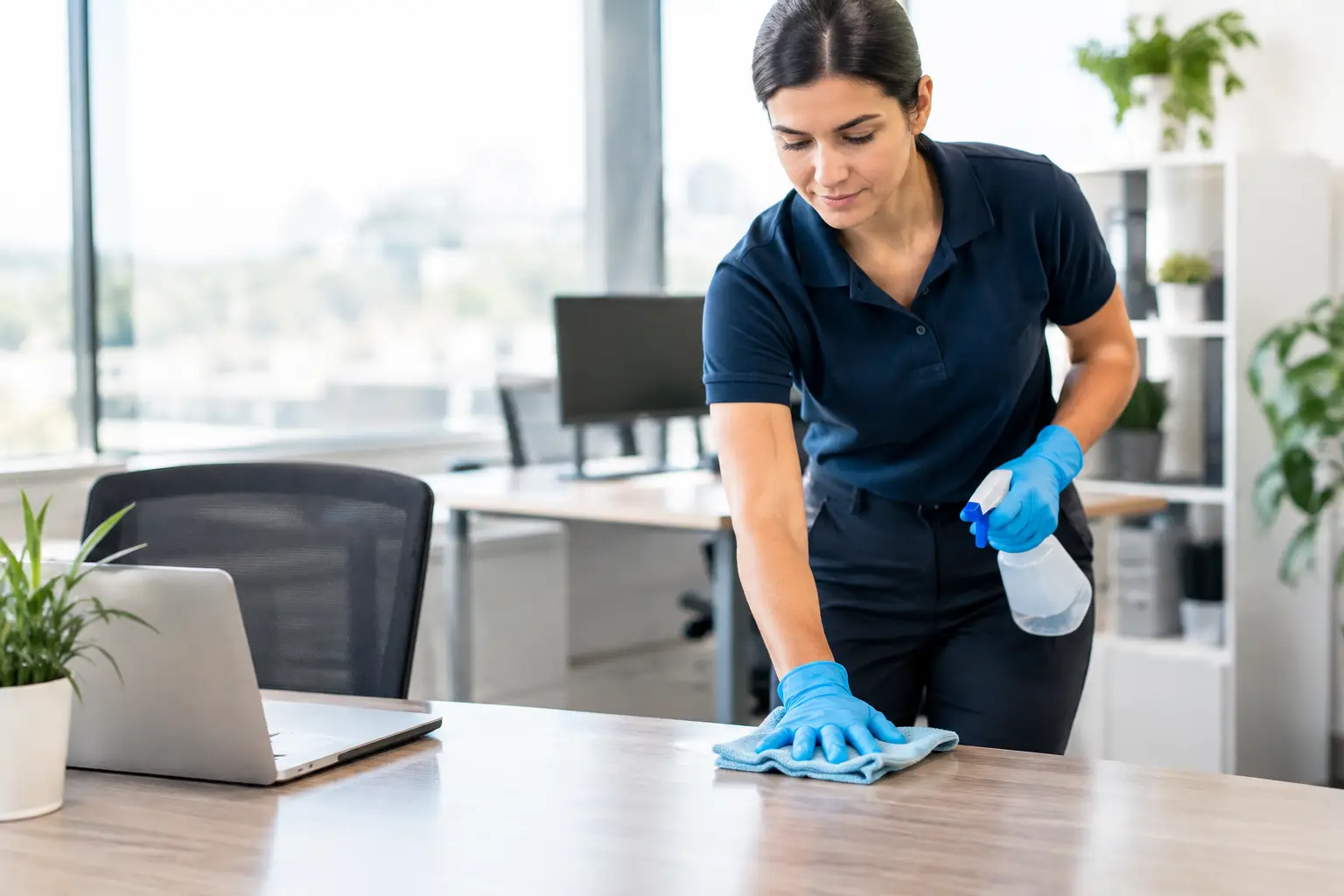
A lobby can look clean at 8:00 a.m. and still fall short of workplace hygiene by noon. Door handles, restroom fixtures, breakroom counters, elevator buttons, shared desks, and high-traffic floors all collect soil and touchpoints throughout the day. For facility leaders, the question is not whether cleaning happened last night. It is whether the building remains healthy, presentable, and ready for the people who rely on it.
Workplace hygiene is an operational responsibility. It affects employee comfort, visitor confidence, safety planning, and the reputation your organization earns with every person who walks through the door. A dependable program recognizes that each facility has different traffic patterns, risks, hours, and expectations.
What Workplace Hygiene Means in a Commercial Facility
Workplace hygiene is more than visible tidiness. It is the consistent management of surfaces, shared spaces, restrooms, waste, floors, and touchpoints to reduce the spread of contaminants and maintain a professional environment.
That distinction matters. Vacuumed carpet and empty trash cans are part of a clean facility, but hygiene also requires attention to the places people touch, eat, gather, and use repeatedly. In an office, that may mean disinfecting conference room tables and breakroom appliances. In a school, it may mean frequent restroom care, classroom touchpoint cleaning, and rapid response to spills. In a healthcare setting, procedures must support the facility’s specific sanitation protocols and patient-facing standards.
A strong program also protects the experience of people who may never see the work behind it. Visitors notice odors, fingerprints on glass, overflowing bins, dirty corners, and poorly maintained restrooms quickly. Employees notice them too, particularly when they use the same shared spaces every day.
Start With How Your Building Actually Operates
A cleaning schedule should follow the building’s use, not a generic checklist. Facilities with 20 daily visitors have different needs than facilities hosting hundreds of employees, students, patients, members, or congregants each week.
Begin with a walkthrough that identifies where traffic gathers and where hygiene failures would have the greatest impact. Entrances, restrooms, breakrooms, reception areas, elevator banks, classrooms, locker rooms, worship spaces, and shared workstations often need closer attention than lower-use areas. Floor type, occupancy, public access, food service, and operating hours all affect what should be cleaned and how often.
Frequency is a practical decision, not a one-size-fits-all promise. A small professional office may need service three evenings per week, while a daycare, gym, medical office, or high-traffic financial institution may benefit from cleaning five or six days per week. During flu season, special events, construction projects, or periods of higher occupancy, additional service may be appropriate.
The right plan should also account for minimal disruption. Day porter support can help address restrooms, spills, and touchpoints during business hours, while recurring evening cleaning can handle more detailed work after the facility is empty. For some organizations, that combination is more effective than asking one visit to solve every need.
Focus on the Areas That Influence Health and Perception
Not every surface needs the same treatment. Over-cleaning low-touch areas can waste time, while under-serving high-touch spaces creates avoidable risks. The goal is to use trained labor where it has the greatest operational value.
High-touch surfaces deserve regular attention because they are shared across many people. This includes door hardware, light switches, handrails, faucets, toilet flush handles, appliance handles, reception counters, copier controls, and elevator buttons. Proper cleaning removes visible soil first. Disinfecting is then used according to product directions and required contact time, when the surface and situation call for it.
Restrooms require their own standard. A restroom that appears neglected can undermine confidence in the entire facility, even when other areas are well maintained. Reliable restroom service includes cleaning and disinfecting fixtures, replenishing soap and paper supplies, removing waste, cleaning partitions and touchpoints, and addressing floors and odors. It also requires enough visit frequency to keep conditions stable between cleanings.
Breakrooms and kitchens are another common pressure point. Food debris, microwaves, refrigerator handles, sinks, tables, and coffee stations can become hygiene concerns quickly. Clear expectations matter here: determine whether the cleaning team will clean exterior appliance surfaces, wipe tables, manage waste, and maintain sinks, while employees remain responsible for personal dishes, food storage, and spills they create.
Build Accountability Into the Cleaning Program
A cleaning plan is only as dependable as the follow-through behind it. Facility managers should be able to tell what work is scheduled, who is responsible for it, and how concerns will be handled. Vague promises of a “clean building” leave too much open to interpretation.
A written scope of work should define service frequency, areas included, recurring tasks, periodic tasks, supply responsibilities, access procedures, and communication expectations. Checklists are useful when they support quality control rather than become paperwork no one reviews. They give teams a shared standard and help make inspections more consistent.
Field management is equally important. Cleaning teams need training, supervision, and a clear escalation process when they encounter a maintenance issue, an unsafe condition, a supply shortage, or a service concern. A missed detail can happen in any busy facility. What separates a reliable partner is how quickly the issue is reported, corrected, and prevented from repeating.
For facilities with multiple decision-makers, establish one primary point of contact on both sides. That makes it easier to adjust service after events, report concerns, approve added work, or revisit cleaning frequency as occupancy changes.
Use Deep Cleaning and Disinfecting Purposefully
Recurring janitorial service keeps a facility maintained, but it does not replace periodic deep cleaning. Carpet extraction, detailed floor care, high-dusting, upholstery cleaning, interior glass care, and intensive restroom work can address buildup that routine service may not fully remove.
Deep cleaning is especially valuable before a major event, after a busy season, when reopening or reconfiguring a space, or when visible buildup begins to affect appearance and odors. It can also support a reset after construction, water damage remediation, or an extended period of heavy use.
Disinfecting should be approached with the same care. It is not a substitute for routine cleaning, and more chemical is not automatically better. Effective disinfection depends on using appropriate products, following label instructions, allowing proper dwell time, and applying the process to relevant surfaces. Facilities with specialized requirements should communicate those expectations during onboarding so procedures can be matched to the environment.
Measure Results Beyond a Quick Visual Check
A clean-looking lobby is valuable, but workplace hygiene should be evaluated across the full facility. Regular inspections help identify patterns before they become complaints. Are restroom supplies consistently available? Are corners, baseboards, and floor edges receiving attention? Do high-touch areas feel clean throughout the day? Are cleaning tasks being completed without interrupting staff, students, patients, or guests?
Feedback from occupants can also reveal what a walkthrough misses. Employees may point out an afternoon restroom issue, recurring breakroom odors, or a conference room that needs attention after frequent meetings. Treat that input as useful operating information, not just a complaint.
The best time to review a cleaning plan is before service problems become routine. Changes in staffing, tenant mix, operating hours, weather, event schedules, or facility use can all justify an adjustment. A plan that worked last year may no longer be the right fit.
Choose a Partner That Treats Hygiene as an Operating Standard
For larger commercial facilities, cleaning quality depends on more than assigning a crew. It requires a clear assessment, a customized scope, trained professionals, dependable oversight, and accessible communication. Colonial Commercial Cleaning approaches workplace hygiene as part of the environment your employees and visitors experience every day, not as an after-hours task that should be invisible until something goes wrong.
A well-managed program gives facility leaders confidence that the building is being cared for consistently, even during busy weeks and changing conditions. Schedule a facility assessment before setting expectations, then use what you learn to create a cleaning plan that protects the spaces where your organization does its most important work.