

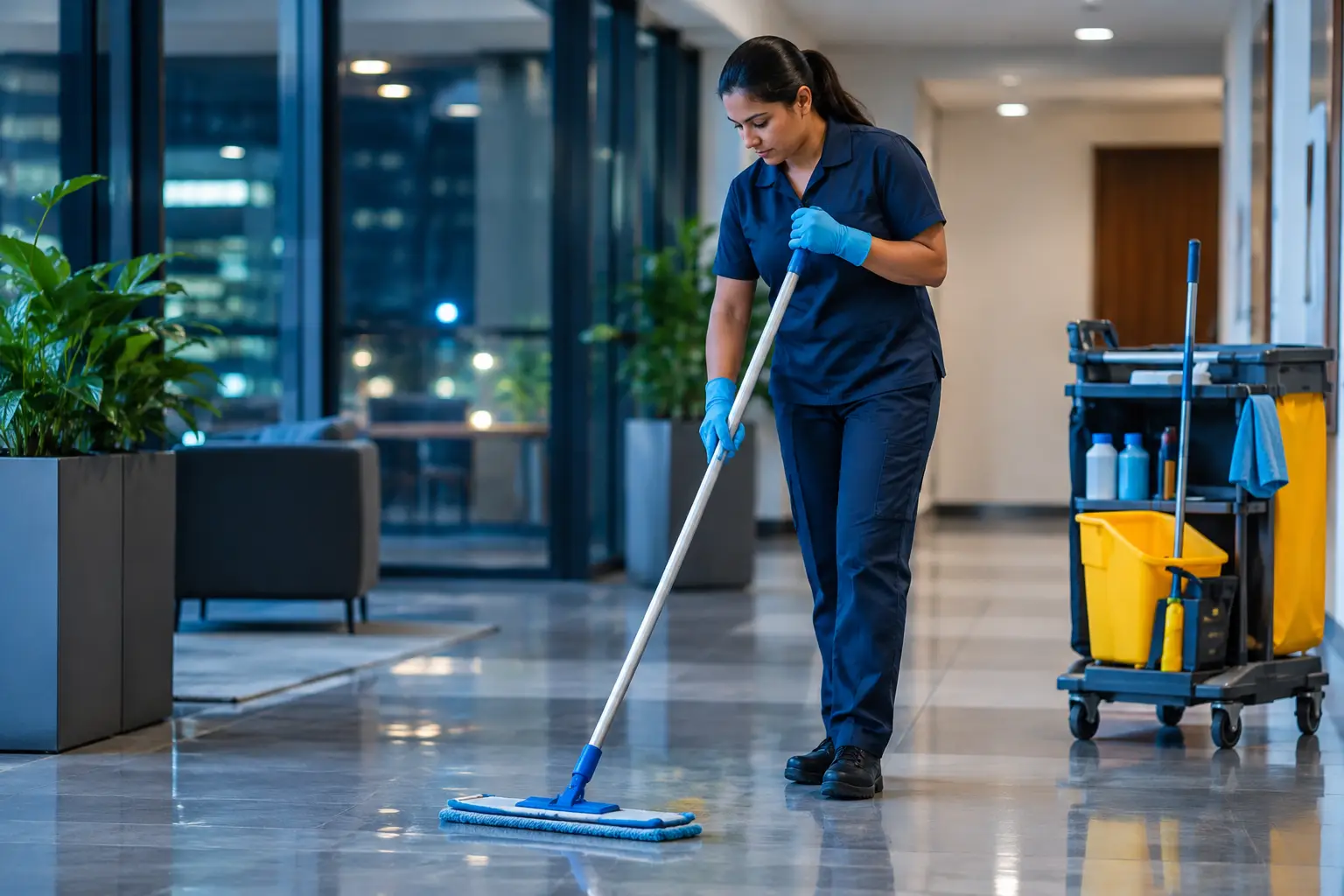
A night cleaning review should do more than confirm that trash was removed and floors look presentable at 8 a.m. For facilities that depend on a clean, healthy, visitor-ready environment, the review is a practical way to verify that a cleaning partner is meeting expectations after hours, when most of the work happens out of sight. It connects cleaning quality to staff safety, occupant confidence, and the condition of the building over time.
For property managers, facilities directors, and administrators across Northern Virginia, Washington, D.C., and Maryland, nighttime service can be the best fit for an active workplace or public-facing facility. The right schedule reduces disruption during business hours. But it also requires clear standards, documented communication, and consistent oversight.
Why a Night Cleaning Review Matters
Night cleaning is designed around a simple operational goal: complete essential work without interrupting employees, students, patients, members, guests, or visitors. Offices can begin the next day with restrooms stocked, touchpoints disinfected, carpets maintained, and common areas ready for use. Schools can avoid cleaning around class changes. Banks can protect a professional appearance without disrupting customer service.
The trade-off is that leaders are not usually present while the work is performed. A facility may look acceptable in the morning while recurring details are missed: restroom partitions are not fully cleaned, high-touch surfaces are skipped, carpet edges collect debris, or consumables are inconsistently replenished. These small gaps can become visible quickly in high-traffic settings.
A structured review makes performance measurable rather than subjective. It gives the client and cleaning team a common definition of clean, including what must be completed each night, what is handled on a rotating schedule, and what requires immediate escalation.
What to Evaluate During a Night Cleaning Review
The most useful review starts with the areas that affect daily operations and public perception. Front entrances, lobbies, restrooms, break rooms, reception areas, elevators, and high-traffic corridors deserve close attention because they shape the first impression of the facility.
Look beyond surface appearance. Floors should be free of visible debris, but they should also receive the correct care for their material and traffic level. Restrooms should be clean, odor-controlled, stocked, and checked for paper waste near dispensers and fixtures. In kitchens and break rooms, counters, sinks, appliance exteriors, and waste areas should be addressed in a way that supports both cleanliness and pest prevention.
High-touch surfaces are equally important. Door handles, elevator buttons, railings, light switches, shared equipment, and reception counters can be overlooked when a cleaning plan is too general. In healthcare facilities, daycares, schools, and gyms, the frequency and method for disinfecting these surfaces should reflect the facility’s risk level and occupancy patterns.
A night cleaning review should also consider whether the cleaning team is following the agreed scope. If a contract includes nightly restroom service, three-times-weekly vacuuming, weekly detailed dusting, or periodic carpet cleaning, those frequencies should be easy to confirm. A strong provider uses cleaning checklists and site-specific procedures rather than relying on memory or assumptions.
Ask Whether Results Are Consistent, Not Occasional
One excellent morning does not establish dependable service. The more meaningful question is whether the facility looks and feels properly maintained every day, including after busy events, bad weather, peak occupancy, or staff absences.
Consistency depends on trained personnel, reliable supervision, and a plan that matches the building. A museum with delicate public spaces has different needs than a medical office. A religious institution may need flexible support around services and community events. A large office building may require focused evening work in restrooms and shared spaces, while a daycare needs heightened attention to sanitation practices and approved cleaning methods.
When reviewing performance, watch for patterns. Repeated comments about restroom supplies, dust accumulation, floor appearance, or missed trash removal are not isolated inconveniences. They are signs that the scope, staffing, communication process, or quality-control process needs attention.
Review the Cleaning Plan, Not Just the Outcome
A clean appearance matters, but the process behind it matters too. Facilities should know who is responsible for the site, how concerns are reported, and when corrections are expected. If a spill, unexpected event, or special cleaning need arises, the response path should be clear.
A dependable cleaning partner should provide a defined onboarding process before regular service begins. This typically includes an on-site facility assessment, a custom cleaning plan, a review of access procedures, and agreement on the priorities for each area. That early planning prevents common after-hours issues, such as crews entering restricted rooms, missing specialty surfaces, or using a schedule that conflicts with security and building operations.
The plan should also distinguish routine janitorial work from periodic services. Daily cleaning may keep a facility orderly, but it does not replace carpet extraction, detailed floor care, high dusting, deep restroom cleaning, or targeted disinfecting. When these services are not scheduled deliberately, facilities may see gradual decline even when nightly service appears satisfactory.
Confirm That Communication Is Easy and Documented
After-hours cleaning works best when clients do not have to wait until the next site visit to report an issue. A responsive provider should offer a practical way to communicate concerns, request adjustments, and confirm resolutions. Documentation can be as straightforward as site checklists, service logs, inspection notes, and follow-up messages.
This is especially valuable for facilities with multiple decision-makers. An office manager may notice a supply issue, a building engineer may identify floor-care concerns, and a facilities director may need to approve scope changes. Clear communication keeps those observations from getting lost between shifts.
It is also reasonable to expect accountability when service falls short. Every commercial facility has occasional unexpected needs. What differentiates a professional provider is how quickly the issue is acknowledged, corrected, and prevented from recurring.
When Night Cleaning Is the Right Fit
Night cleaning is often ideal for offices, financial institutions, schools, healthcare offices, hotels, fitness centers, and other facilities where daytime cleaning would interfere with normal activity. It can support a quieter, safer work environment and allow crews to complete detailed tasks without navigating constant foot traffic.
Still, it is not automatically the right choice for every task. Day porters may be necessary for restrooms, entryways, spills, and high-volume waste during operating hours. A hybrid model can work well when a facility needs both an after-hours cleaning crew and visible daytime support. The right approach depends on occupancy, operating hours, security requirements, traffic patterns, and the standard the facility wants to maintain.
For organizations that operate six or seven days a week, the review should also address schedule coverage. Cleaning three days per week may suit a lightly occupied office, while a busy school, medical setting, or public facility may require five, six, or more service days. Matching frequency to actual use is more effective than selecting a schedule based solely on budget.
Build a Review Process That Protects Your Facility
The best night cleaning review is brief enough to use regularly and detailed enough to identify problems early. Walk key areas at different times of the week. Ask staff who open the building what they see first each morning. Compare results against the agreed checklist, especially after events, seasonal weather changes, or periods of heavy occupancy.
Colonial Commercial Cleaning approaches this work as an operational responsibility, with customized plans, trained teams, field management, and clear client communication. The goal is not simply to leave a building looking better overnight. It is to help the people who use the facility start each day in an environment that feels clean, cared for, and ready for business.
A well-run nighttime program should give facility leaders confidence without requiring constant follow-up. If your review repeatedly reveals the same missed details, treat that as a reason to clarify expectations and strengthen accountability before minor concerns affect the experience of everyone who walks through the door.