

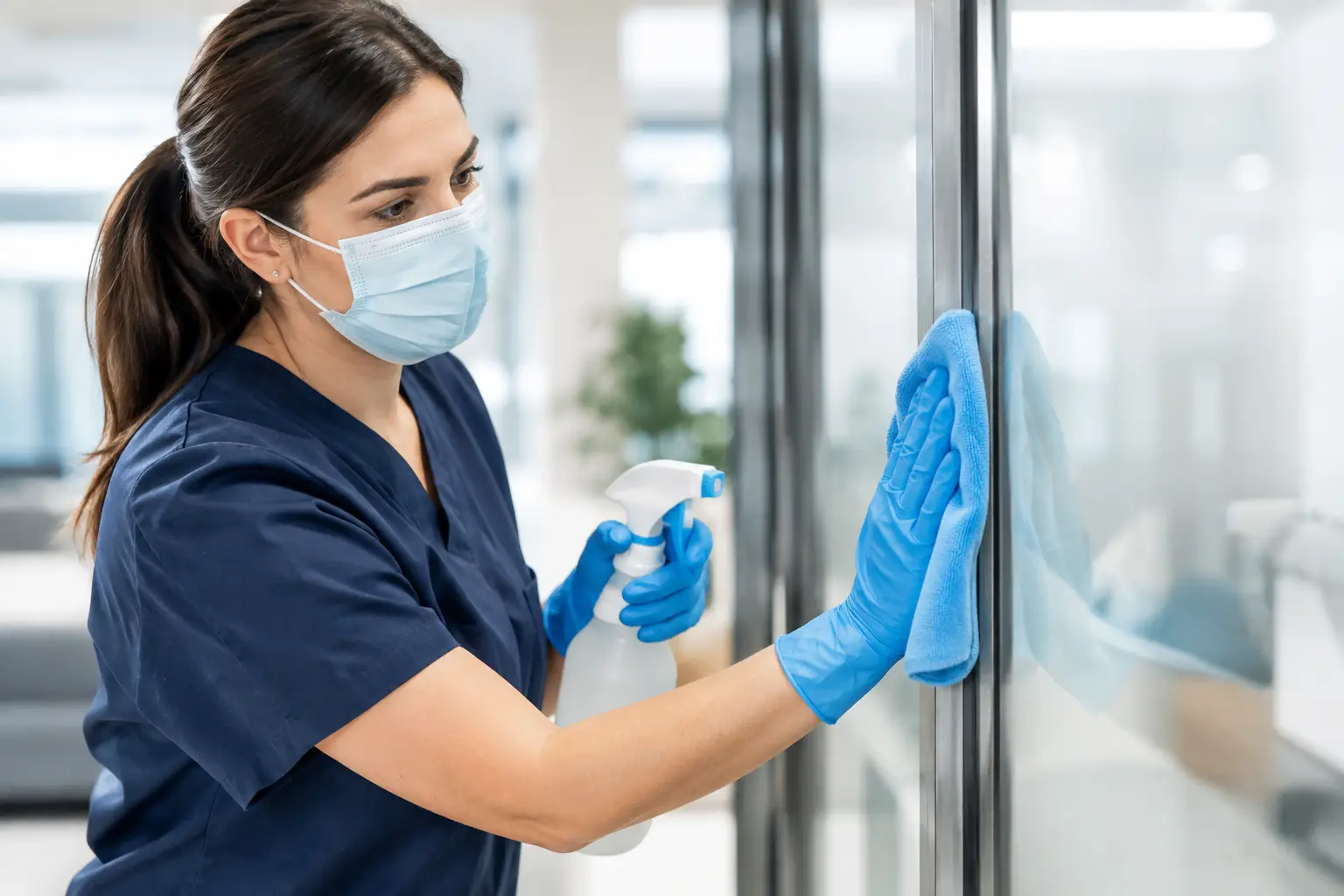
A smudged glass door or overflowing trash bin is visible. The infection risks that matter most are often less obvious: a shared touchscreen, a restroom fixture, a breakroom counter, or a classroom desk missed between cleaning cycles. Effective infection control gives facility leaders a practical way to reduce those risks without disrupting the work, care, learning, or service taking place inside the building.
For organizations across Northern Virginia, Washington, D.C., and Maryland, cleanliness is not simply a matter of appearance. It affects employee confidence, visitor impressions, absenteeism concerns, and the ability to keep daily operations moving. The right program is consistent, documented, and designed around how people actually use the facility.
Infection Control Starts With a Facility-Specific Plan
A generic cleaning schedule can leave critical gaps. A financial institution may need focused attention on teller stations, entry glass, ATMs, and customer seating. A daycare needs frequent attention to classroom touchpoints, restrooms, nap areas, and shared toys. In a healthcare setting, waiting rooms, exam spaces, check-in counters, and high-contact surfaces all require a deliberate approach shaped by the facility’s procedures.
That is why a facility assessment should come before a cleaning plan. The goal is to identify where people enter, gather, eat, work, and move through the property. It should also consider occupancy, operating hours, visitor volume, restroom use, floor layout, and the areas that cannot be cleaned during normal business activity.
Service frequency is a key decision. A lightly occupied office may need a different schedule than a busy school, gym, hotel, or religious institution hosting multiple weekly events. More frequent service can reduce buildup and help maintain high-touch areas between busy periods, but frequency alone does not solve the problem. The work must be directed toward the right areas, completed with appropriate products and methods, and checked for consistency.
Cleaning, Sanitizing, and Disinfecting Have Different Roles
These terms are often used interchangeably, but they describe different work. Understanding the distinction helps facility managers set clear expectations with their cleaning provider.
Cleaning removes visible soil, dust, spills, and debris from surfaces. It is the foundation of a healthy facility because dirt and residue can interfere with later treatment. Disinfecting uses an appropriate product to address germs on hard, nonporous surfaces. Sanitizing reduces certain germs to levels considered safer on applicable surfaces, often in settings such as food service or child care where the intended use of the product matters.
The correct approach depends on the surface, the environment, and the reason for service. A carpeted conference room may need detailed vacuuming and periodic carpet extraction, while a restroom requires thorough cleaning followed by targeted disinfection of fixtures and touchpoints. Applying a disinfectant to an unclean surface, using the wrong product for the material, or wiping it away before the required contact time can reduce its effectiveness.
Facility leaders do not need to manage every chemical or procedure themselves. They do need a service partner that trains teams on product use, follows label directions, protects sensitive surfaces, and communicates what is included in the scope of work.
Focus on the Places People Touch Most
High-touch surfaces deserve special attention because they connect many different users throughout the day. In most commercial environments, those areas include door handles and push plates, elevator buttons, light switches, railings, shared equipment, faucet handles, toilet flushers, reception counters, breakroom appliances, and touchscreens.
The priorities change by facility type. A museum may need careful cleaning around visitor-facing exhibits and interactive displays. A gym needs an approach that accounts for equipment turnover, locker rooms, and water fountains. A university building may see traffic surge between classes, requiring cleaning windows that align with the academic schedule.
Rather than relying on a fixed list alone, teams should follow the traffic. When an area hosts a meeting, event, service, or visitor rush, cleaning needs can change quickly. A well-managed program leaves room for these adjustments while preserving the routine work that keeps the entire building in order.
Consistency Depends on People and Process
Infection prevention is not accomplished by purchasing stronger products. It depends on the people using them and the process guiding their work. Trained cleaning professionals should understand cross-contamination prevention, including when to change cloths, how to manage tools by area, and why restroom equipment should not move into breakrooms, offices, or patient-facing spaces.
Clear checklists make this work accountable. They define which spaces are serviced, what tasks are expected, and how often each task is completed. Checklists also help a cleaning team maintain standards when staffing changes, facilities expand, or schedules shift. They are not a substitute for judgment, but they provide a dependable baseline.
Field management adds another layer of confidence. Periodic inspections, responsive communication, and a defined escalation process help address concerns before they become recurring problems. For a busy facilities director, this means less time chasing missed details and more confidence that cleaning is being handled as part of normal operations.
Prevent Disruption While Maintaining Standards
The best infection control programs fit the facility rather than forcing the facility to fit the cleaning schedule. Some buildings need evening janitorial service after employees leave. Others require daytime porters to maintain restrooms, remove waste, and respond to spills while the property remains open. Healthcare, education, hospitality, and religious settings may need a combination of both.
There are trade-offs. Cleaning exclusively after hours minimizes interruption, but it may leave heavily used areas unattended during the day. Daytime service provides faster response and a more consistently maintained appearance, but teams must work discreetly around staff, customers, students, patients, or guests. A custom schedule can balance both needs.
Communication matters just as much during special circumstances. A seasonal illness increase, an event with high attendance, a water intrusion issue, or a confirmed contamination concern may call for additional attention. The cleaning provider should be easy to reach and ready to adjust the service plan within the limits of the facility’s needs and operating procedures.
Give Employees and Visitors a Role
Professional cleaning is essential, but facility-wide habits support it. Employees and occupants should know how to report spills, supply shortages, overflowing waste, and concerns in shared areas. They should also understand the expectations for breakrooms, conference rooms, and workstations that are used throughout the day.
The goal is not to place cleaning responsibilities on employees. It is to prevent small issues from becoming larger ones and ensure the cleaning team receives timely information. In a large property, a prompt report can make the difference between a quick response and an avoidable disruption.
Visible care also reinforces trust. Stocked restroom dispensers, clean entryways, orderly common areas, and properly maintained floors tell employees and visitors that the organization takes their well-being seriously. That message is especially valuable in facilities where people may already feel vulnerable, including healthcare practices, daycares, schools, and public-facing service locations.
Choose Accountability Over a One-Size-Fits-All Scope
A cleaning contract should do more than state the number of service days. It should clarify the service scope, schedule, communication process, quality expectations, and any specialty needs such as carpet care, floor maintenance, deep cleaning, or targeted disinfecting. Before service begins, an onboarding discussion gives both sides an opportunity to align on access, security, supply locations, priority areas, and operational constraints.
Colonial Commercial Cleaning builds this structure around on-site assessments, custom cleaning plans, trained teams, and active field oversight. For facilities requiring service three or more days per week, that level of planning can turn cleaning from an ongoing concern into a dependable part of the operating routine.
A facility does not need to wait for a visible problem or an illness concern to improve its standards. Walk the property with a critical eye, identify the surfaces and spaces people rely on most, and make sure the cleaning plan reflects the way your building truly operates. That is where healthier, more confident workplaces begin.