

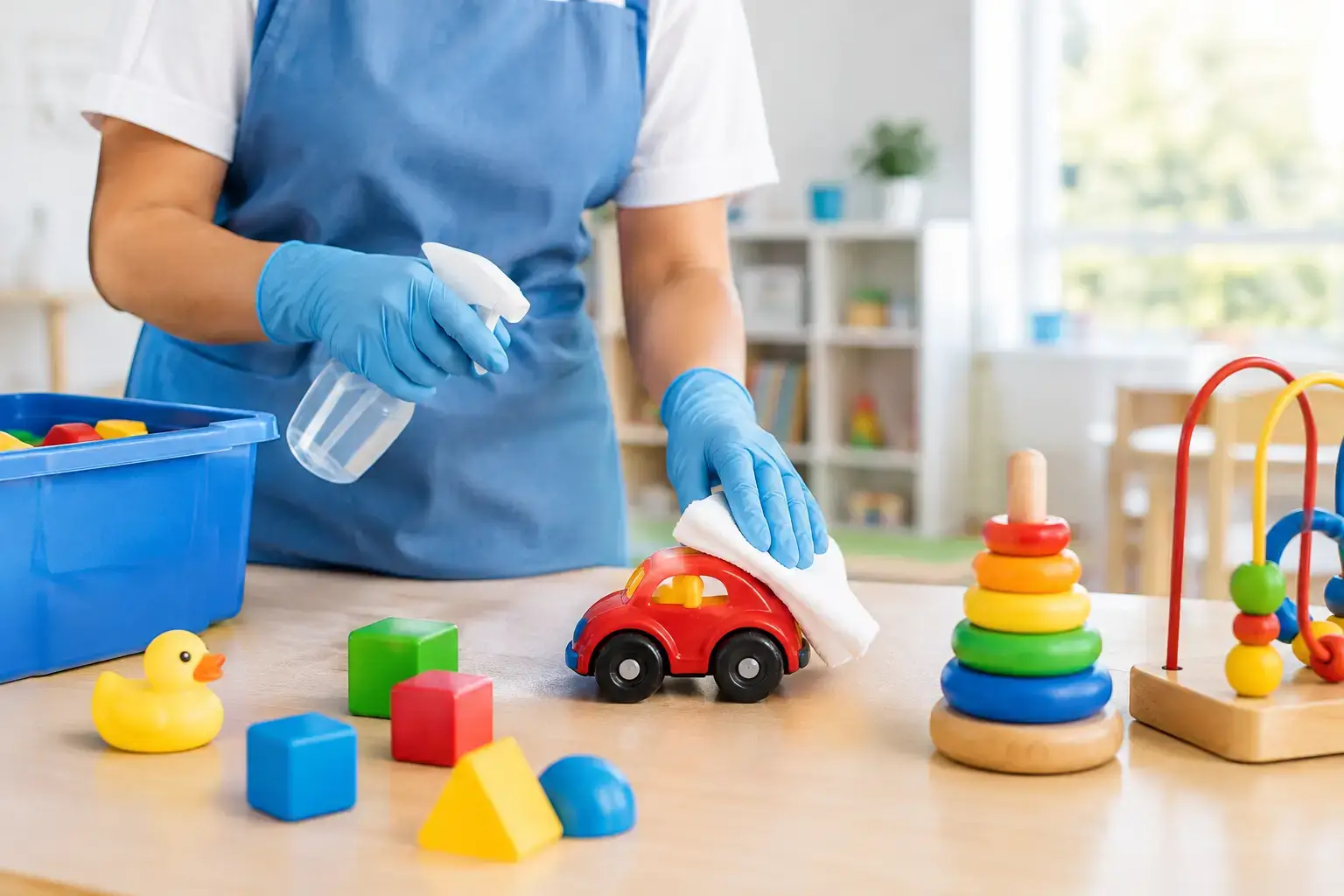
Children do not experience toys as individual items. A block moves from one set of hands to another, a doll travels between learning centers, and a teether may be dropped, picked up, and shared before a teacher can intervene. Knowing how to sanitize daycare toys means building a dependable system that keeps up with that reality, protects children and staff, and gives families confidence in the care environment.
For daycare administrators and facility managers, toy sanitation should not rely on memory or a once-a-day reset alone. It needs clear product guidance, assigned responsibilities, scheduled cleaning intervals, and a process that staff can follow even during a busy pickup, meal, or nap transition.
Start by separating cleaning, sanitizing, and disinfecting
These terms are often used interchangeably, but they serve different purposes. Cleaning removes visible soil, food residue, saliva, and other debris. Sanitizing reduces germs on a surface to a safer level. Disinfecting uses a stronger process intended to kill more germs and is generally appropriate after exposure to blood, vomit, diarrhea, or another body fluid.
A toy must be cleaned before it is sanitized or disinfected. Applying a sanitizer over dried food, dirt, or sticky residue can limit the product’s effectiveness. This is one of the most common gaps in daycare cleaning programs: the right product is present, but the surface was not properly prepared.
Your state or local childcare licensing requirements may establish specific procedures and approved products. Follow those requirements first, then follow the product label exactly. The label identifies which surfaces the product can treat, whether it is food-contact safe, the required dilution, and the contact time needed for it to work. Never assume that spraying and immediately wiping a toy provides adequate sanitation.
Create a toy sanitation routine by risk level
Not every toy needs the same response at the same time. A practical system groups toys by how they are used, then establishes a clear cleaning trigger for each group. Staff should be able to identify what needs immediate attention without stopping to make a judgment call.
Mouth-contact toys need immediate removal
Teethers, pacifiers, chew toys, infant rattles, and any toy that has been mouthed should be placed in a designated soiled-toy bin as soon as use is finished. They should not return to the play area until they have been cleaned, sanitized, rinsed if required by the product label, and fully air-dried.
Use a bin that is clearly labeled and kept out of children’s reach. A covered container can help control the appearance of clutter and prevent clean toys from being mixed with soiled ones. For infant rooms, maintaining enough duplicate toys is essential. Staff cannot follow the process consistently if removing one toy leaves too few available for the class.
Shared hard-surface toys need scheduled sanitation
Plastic blocks, figurines, play kitchen pieces, ride-on toys, and other nonporous items should be cleaned and sanitized at least daily, and more often when shared heavily or visibly soiled. High-touch items can require attention between groups, after outdoor use, or after a child has put them in their mouth.
For a busy classroom, rotating a set of toys out of use is often more reliable than trying to sanitize items while children are actively playing. Put clean items into rotation and move used items to the sanitation area at designated times. This reduces disruption and gives the product enough contact time to perform as intended.
Soft toys require a different plan
Plush animals, fabric dress-up pieces, foam items, and other absorbent toys cannot always be treated with a surface sanitizer. When laundering is allowed, wash according to the manufacturer’s instructions and dry completely before returning items to use. Choose washable soft toys whenever possible, particularly in infant and toddler classrooms.
If a soft item cannot be washed or thoroughly cleaned after contamination, remove it from use. A small collection of well-maintained, washable soft toys is safer and easier to manage than an oversized collection that staff cannot reliably process.
Follow the right process for hard toys
A consistent process protects against skipped steps. Designate a utility sink or cleaning area away from food preparation, handwashing sinks, and children’s activity tables. Keep cleaning supplies secured and ensure staff have gloves and the tools required for the task.
For washable, nonporous toys, use this sequence:
- Remove visible soil with soap or detergent and water.
- Rinse the toy if needed to remove cleaning residue.
- Apply the approved sanitizer at the correct dilution or ready-to-use concentration.
- Keep the surface wet for the full label contact time.
- Rinse if the label requires it, especially for toys likely to go in a child’s mouth.
- Allow the toy to air-dry completely on a clean rack or surface before storing it.
Do not mix cleaning chemicals. Combining products can create dangerous fumes, reduce effectiveness, or damage toys and surfaces. If staff use concentrated solutions, provide measured dispensers or dilution-control equipment rather than asking employees to estimate amounts. A correctly selected sanitizer used at the wrong concentration is not a reliable sanitation program.
Dishwashers can be useful for smaller, dishwasher-safe plastic toys, provided the manufacturer permits it and the dishwasher reaches an appropriate sanitizing cycle. They are not a replacement for sorting toys by condition, inspecting them for trapped residue, and allowing them to dry before storage.
Build sanitation into the classroom schedule
The best toy-cleaning procedure is the one that still works on a demanding day. Assign toy sanitation tasks to specific roles and times, such as after morning free play, before or after lunch, following nap time, and at closing. A written classroom checklist makes expectations visible and gives administrators a way to verify completion.
Daily schedules should also account for unexpected contamination. When a child is ill, has an accident, or mouths multiple toys, teachers need a fast response process: isolate the affected toys, clean and disinfect when appropriate, and return only fully dry items to the classroom. Keep a small supply of clean replacement toys so instruction and supervision can continue without interruption.
For larger facilities, a central toy-washing area can improve consistency. It allows staff to process toys away from active classrooms and makes supply management easier. The trade-off is transport and tracking. Use labeled bins or carts to prevent clean and soiled items from crossing paths.
Train staff on the details that matter
A written procedure is only useful when employees understand why each step exists. During onboarding and refresher training, demonstrate how to read a product label, measure dilution, observe contact time, use personal protective equipment, and store chemicals safely. Staff should know which products are approved for toys and which are reserved for floors, restrooms, or other facility surfaces.
Supervisors should also inspect toys regularly. Cracked plastic, peeling paint, loose parts, and damaged seams are not just maintenance concerns. They create hard-to-clean areas where moisture and residue can remain. Remove damaged toys promptly and document replacements as part of your facility’s safety process.
Clear accountability matters most when staffing changes or classrooms are busy. A field-managed commercial cleaning partner can support the broader facility program by maintaining classrooms, restrooms, floors, high-touch surfaces, and common areas on a dependable schedule. Daycare staff still need ownership of toys during the day, but professional cleaning support helps ensure the rest of the environment meets the same high standard.
Store clean toys so they stay clean
Sanitized toys should be stored in clean, dry bins, shelves, or cabinets rather than returned to containers that have not been cleaned. Avoid overfilling bins, which can trap moisture and make it difficult to spot soiled or damaged items. For infant and toddler rooms, separate clean mouth-contact toys from general play items.
Inspect storage areas during daily closing procedures. Wipe shelves and bins, remove debris, and make sure no damp toys have been put away. Moisture management is easy to overlook, but it is central to preventing odor, residue, and microbial growth.
A daycare’s sanitation standard is visible in the details parents notice: clean toys, orderly classrooms, fresh-smelling play areas, and staff who can explain the process with confidence. When toy sanitation is treated as a routine operational responsibility rather than an end-of-day scramble, the facility is better positioned to protect children, support educators, and earn trust every day.