

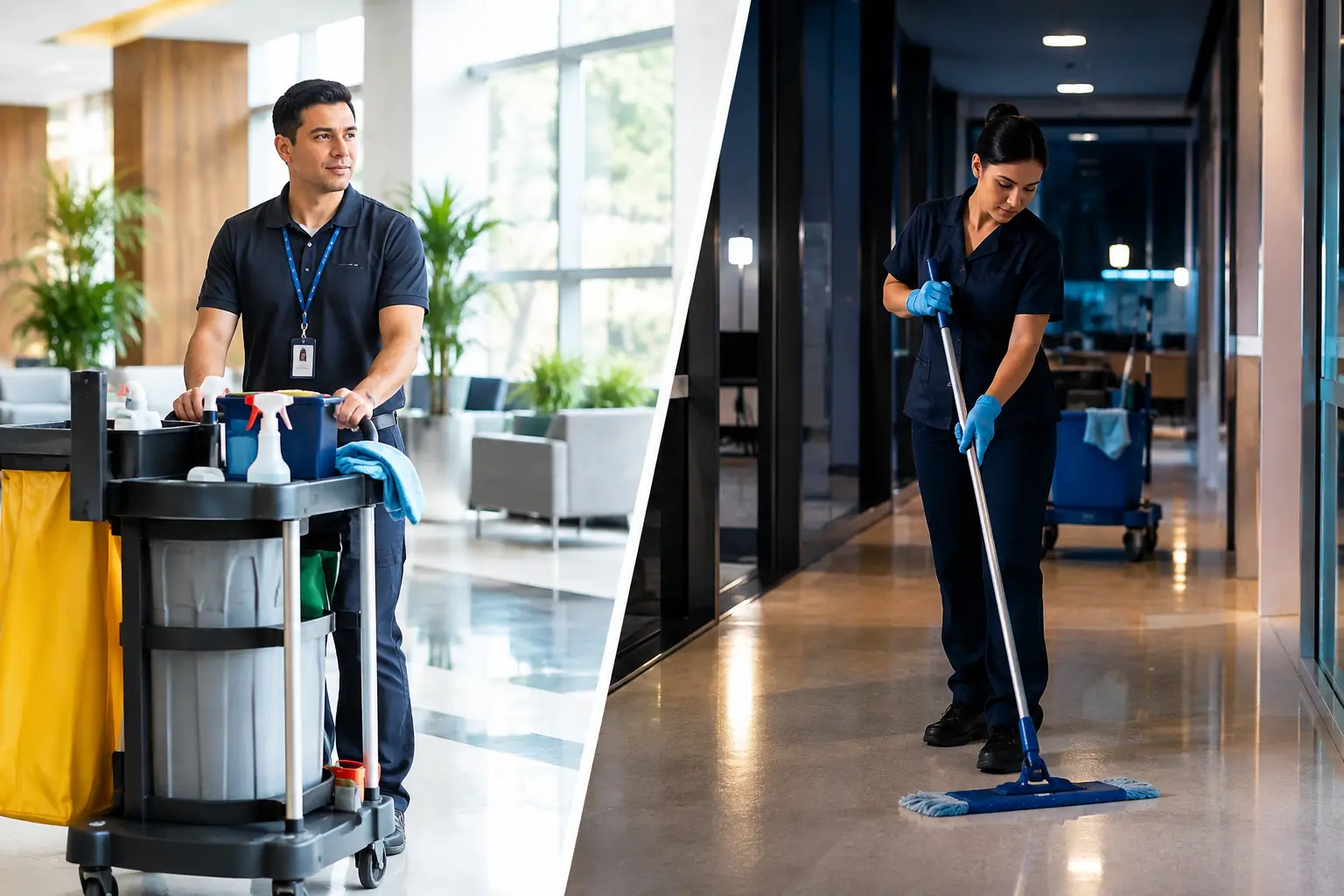
A lobby spill at 10:30 a.m., depleted restroom supplies before lunch, and overflowing waste bins after an afternoon event are not problems that can wait for an overnight crew. That is the central distinction in the day porter versus nightly cleaning decision. Both services protect your facility’s appearance and hygiene, but they solve different operational problems.
For facility managers, administrators, and property leaders, the right answer is rarely about choosing the least expensive service in isolation. It is about matching cleaning coverage to how people actually use the building. A quiet professional office with predictable occupancy has different needs than a school, healthcare practice, hotel, bank branch, gym, museum, or religious institution welcoming visitors throughout the day.
Day Porter Versus Nightly Cleaning: The Core Difference
A day porter works during your building’s occupied hours. Their role is to maintain public-facing and high-use areas as conditions change. They may clean and restock restrooms, remove trash, address spills, wipe touchpoints, straighten lobbies, monitor entryways, and prepare meeting rooms or event spaces between uses.
Nightly cleaning is typically completed after business hours, when a team can work through the facility with fewer interruptions. This service handles the scheduled tasks that restore the building for the next day: vacuuming, mopping, dusting, trash removal, restroom sanitation, breakroom cleaning, and other work included in the cleaning checklist.
The practical difference is responsiveness. A nightly crew resets the facility. A day porter helps it stay clean, safe, and presentable while employees, students, patients, members, and visitors are still inside.
Neither option is automatically better. A facility with modest daytime traffic may receive excellent results from a well-managed nightly cleaning program. A high-traffic property may find that nightly service alone leaves too many visible issues unattended during operating hours.
When a Day Porter Is the Better Fit
Day porter service is most valuable when cleanliness must be maintained in real time. In a building where guests arrive continuously, a clean condition at 7:00 a.m. does not guarantee a clean condition at 2:00 p.m.
Consider a day porter when your facility regularly experiences four or more of the following conditions:
- Restrooms require cleaning or restocking more than once during the day.
- Visitors, clients, patients, parents, or members judge the property as they enter.
- Weather creates recurring moisture, salt, leaves, or debris at entrances.
- Meetings, classes, worship services, or events turn over rooms throughout the day.
- Food service, break areas, fitness spaces, or waiting rooms generate frequent messes.
- Staff need a reliable point of contact for cleaning-related issues during business hours.
Healthcare facilities and dental offices often benefit from daytime attention because waiting rooms and restrooms must remain orderly for patients. Schools, universities, and daycares may need ongoing support in restrooms, cafeterias, entrances, and common areas. Hotels, museums, and religious institutions have a similar challenge: high visitor expectations paired with fluctuating traffic.
A porter also provides operational flexibility. If an executive meeting is added, a spill occurs near a reception area, or an event room needs a quick reset, the work can be handled before it affects the guest experience. That responsiveness can reduce the burden on office staff, maintenance personnel, and front-desk teams who should not have to step away from their primary responsibilities to manage cleaning issues.
There are trade-offs. Day porter coverage is an added labor investment, and the porter may be visible to occupants. In many facilities, however, a professional, uniformed team member quietly maintaining the property reinforces confidence rather than causing disruption. The service plan should clearly define coverage hours, assigned zones, response expectations, and the tasks that remain part of the nightly program.
When Nightly Cleaning Is Enough
Nightly cleaning is often the most efficient choice for offices and commercial spaces with controlled traffic and limited public use. If employees work standard hours, restrooms remain manageable during the day, and common areas do not require frequent attention, an after-hours crew can complete the work thoroughly without navigating occupants.
This approach is especially effective when cleaning requires access to desks, floors, conference rooms, and work areas that are easier to service after staff leave. Vacuuming open office areas, mopping hard floors, emptying waste, cleaning breakrooms, and disinfecting restrooms can be completed systematically when the building is quiet.
Nightly service can also be preferable for facilities with confidentiality, security, or workflow concerns. Financial institutions, corporate offices, and certain administrative spaces may want cleaning activity scheduled outside core business hours. The key is ensuring the cleaning team has clear access procedures, reliable supervision, and a checklist that reflects the property’s priorities.
Even then, nightly cleaning should not mean a one-size-fits-all schedule. A facility may need service three days per week in low-traffic areas while restrooms, entryways, and breakrooms require attention five or more days per week. The schedule should follow use patterns, not a generic package.
Why Many Facilities Need Both
For larger facilities, the strongest program is often not day porter or nightly cleaning. It is day porter and nightly cleaning, with each service assigned a distinct purpose.
A day porter manages immediate conditions: trash that accumulates, supplies that run low, spills that create slip risks, and public areas that need attention before visitors notice. The nightly crew performs the deeper, systematic work that is difficult to complete during occupied hours. This includes detailed floor care, full restroom cleaning, dusting, waste removal from offices, and scheduled disinfection.
This combined approach works well for facilities of 2,500 square feet or more that operate several days a week and carry a visible standard of care. It also helps prevent the common problem of asking one service to do two incompatible jobs. A porter should not be rushed through comprehensive after-hours cleaning, and a nightly crew should not be expected to resolve a midday restroom issue from offsite.
The handoff matters. A dependable provider documents responsibilities, communicates changes in building activity, and uses field management to verify that both daytime and nighttime tasks are completed. Without that structure, duplicated work and missed areas can quickly erode value.
Build the Schedule Around Your Facility’s Risk Points
The most useful cleaning plan begins with an on-site assessment, not a guess about square footage alone. Facility size matters, but traffic flow, operating hours, building layout, floor surfaces, restroom count, occupancy, and industry requirements matter just as much.
Start by identifying the moments when cleanliness is most visible or most critical. A bank may prioritize entrances, teller areas, and customer restrooms. A church may need intensive preparation before weekend services and prompt cleanup afterward. A gym may require frequent attention to locker rooms, touchpoints, and waste throughout the day. A medical office may need a highly disciplined routine for waiting areas and restrooms that supports patient confidence and sanitation expectations.
Then separate recurring tasks into two categories: work that must happen immediately and work that can happen after hours. Restocking paper products during the day may be essential. Detailed vacuuming of a carpeted office suite may be better performed at night. This simple distinction makes it easier to establish the right staffing and service frequency.
Budget should be part of the discussion, but it should be connected to outcomes. A lower-cost program that leaves restrooms unattended during peak hours, burdens employees with cleanup, or exposes visitors to an unkempt lobby can create a higher operational cost over time. The goal is not to add unnecessary coverage. It is to invest where clean conditions protect safety, productivity, and your organization’s reputation.
What to Expect From a Reliable Cleaning Partner
Whether you select day porter coverage, nightly service, or a combination, accountability should be built into the program. Ask how the provider documents tasks, handles service concerns, trains team members, manages keys or building access, and communicates with your designated facility contact.
A custom scope of work should spell out the frequency of restroom cleaning, supply restocking, trash removal, floor care, disinfection, and any specialized tasks. It should also account for events, seasonal weather, high-traffic days, and changes in occupancy. A formal onboarding process gives both teams a chance to confirm expectations before service begins.
Colonial Commercial Cleaning approaches this process through an on-site facility assessment, a custom quote, and a structured onboarding meeting. That level of planning is especially valuable when daytime and after-hours teams must coordinate without disrupting your operations.
The right cleaning schedule should make your facility easier to run. When occupants can focus on their work, visitors enter a well-maintained space, and concerns are addressed before they become complaints, the cleaning program is doing more than checking boxes. It is supporting the confidence people place in your organization every day.