

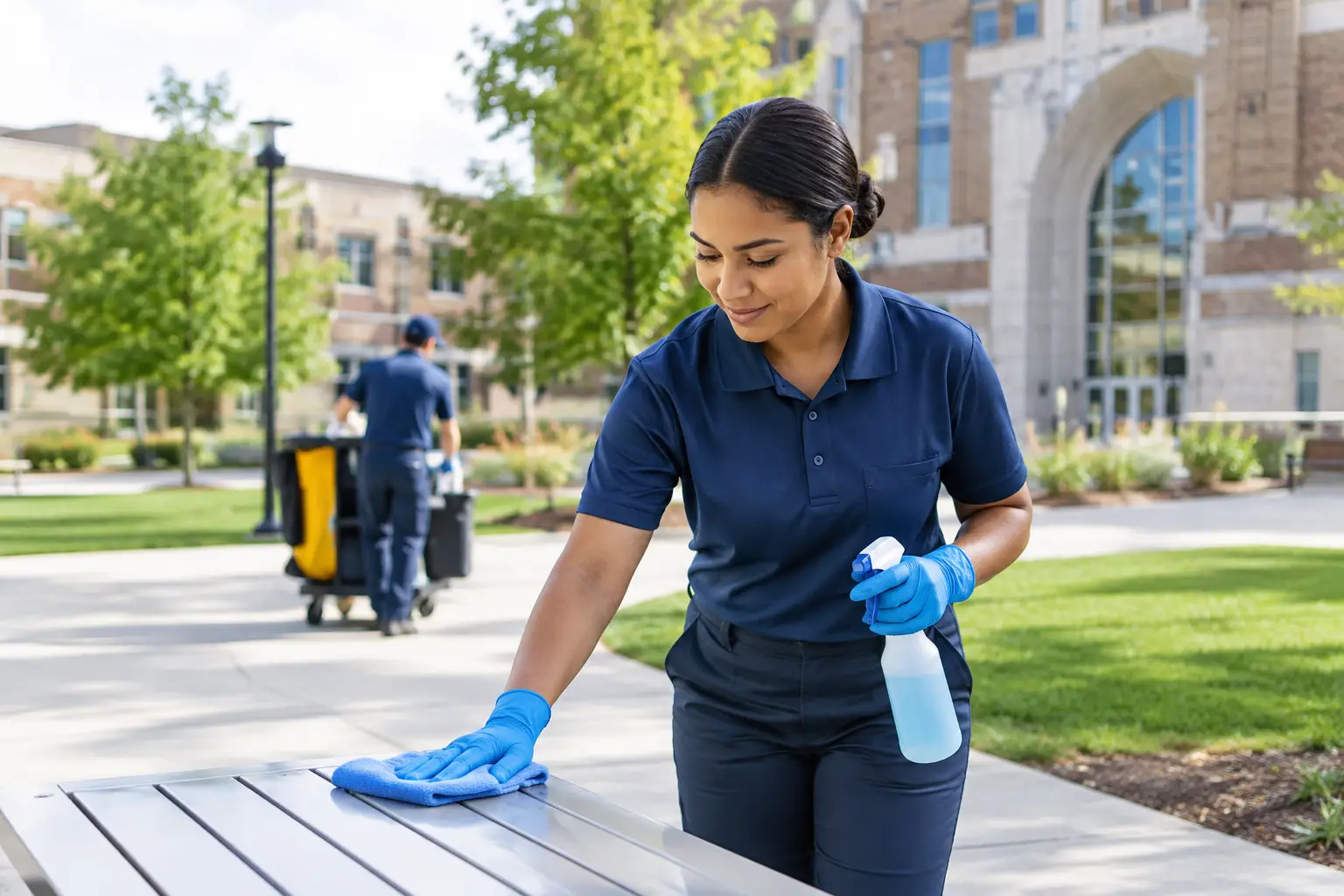
A university can look clean at 7:00 a.m. and feel neglected by noon. Thousands of students, faculty, staff, guests, and vendors move through classrooms, residence halls, libraries, dining areas, restrooms, athletic spaces, and administrative offices every day. Effective cleaning services for universities account for that constant movement, shifting schedules, and the high expectations placed on a campus environment.
For facilities leaders, the goal is not simply to empty trash cans or mop floors after hours. It is to maintain a healthy, welcoming, and professionally managed campus without disrupting instruction, events, research, or student life. That requires a cleaning partner with a clear scope of work, trained teams, dependable field oversight, and a plan that changes as campus activity changes.
Why University Cleaning Requires a Different Standard
A university is not one building with one routine. It is a collection of spaces with different users, traffic levels, hours, and sanitation needs. A lecture hall may require evening cleaning after back-to-back classes, while a student center needs attention throughout the day. Residence halls face heavy restroom and common-area use, especially during move-in, move-out, and weekend events. Administrative offices, on the other hand, often need a quieter, more traditional cleaning schedule.
This variety makes generic janitorial contracts a poor fit. When a provider applies the same checklist to every building, high-use areas are often under-served while lower-traffic spaces receive unnecessary attention. A stronger program assigns frequency and tasks based on how each area operates.
Cleaning also affects more than appearance. Overflowing bins, neglected restrooms, dirty entry glass, and stained carpets can shape how prospective students, parents, donors, and visitors view the institution. For current students and employees, cleanliness influences comfort, confidence, and their willingness to use shared spaces.
What Cleaning Services for Universities Should Cover
A well-built university cleaning program begins with a facility assessment. Before proposing a schedule, the provider should understand the campus footprint, building use, floor types, occupancy patterns, security procedures, access requirements, and peak periods. That assessment creates a practical service plan rather than a one-size-fits-all quote.
Classrooms, lecture halls, and academic buildings
Academic spaces need reliable cleaning that supports the next day of learning. Daily work commonly includes trash removal, vacuuming or hard-floor care, desk and surface cleaning, restroom sanitation, and attention to entrances and high-touch points. In large lecture halls, crews should also inspect aisles, seating areas, and podium spaces where food debris and litter can accumulate quickly.
Scheduling matters here. Evening cleaning works for many academic buildings, but early-morning touch-ups may be necessary after evening classes, campus events, or weekend programs. During exams, cleaning teams should use quiet equipment and coordinate work around testing schedules.
Restrooms and high-touch common areas
Restrooms are one of the clearest measures of a campus cleaning program. They need more than a nightly visit. High-traffic restrooms in student centers, libraries, athletic facilities, and dining-adjacent areas may require daytime service to restock supplies, remove waste, address spills, and maintain sanitary fixtures.
The same is true for elevator buttons, door hardware, handrails, drinking fountains, shared tables, and lobby surfaces. Disinfecting should be purposeful and aligned with the facility’s hygiene requirements, not treated as vague marketing language. A cleaning provider should identify the surfaces that see the most contact and apply appropriate products and procedures consistently.
Residence halls and student life spaces
Residence halls present a different operational challenge because they function as homes as well as institutional spaces. Common kitchens, lounges, community restrooms, laundry rooms, and entryways need frequent attention. Cleaning teams must also be professional, respectful, and prepared to work around resident schedules and restricted-access areas.
Move-in and move-out periods deserve separate planning. These weeks can produce unusually high volumes of trash, floor damage, spills, and last-minute requests. A campus benefits from a provider that can increase staffing, adjust routes, and complete turnover cleaning on a defined timeline.
Floors, carpets, and seasonal deep cleaning
Daily cleaning protects a campus, but periodic specialty work preserves its condition. Carpet cleaning can improve the appearance and useful life of carpeted classrooms, offices, corridors, and residence-hall common areas. Hard-floor maintenance helps prevent premature wear in entrances, hallways, and multipurpose spaces.
Deep cleaning is especially valuable during academic breaks, before major events, and after construction or renovation work. This may include detailed restroom cleaning, baseboards, vents, upholstery, interior glass, high dusting, and floor restoration. The right frequency depends on traffic, building age, climate, and the condition of existing finishes.
Build the Schedule Around Campus Operations
Universities rarely operate on a standard business schedule. Evening classes, athletic events, conferences, performances, summer camps, orientation, and commencement can all change building use with little warning. A cleaning contract must be structured to handle those realities.
For most sizable campuses, service three or more days per week is a starting point, not a final answer. High-traffic facilities may require daily evening cleaning plus daytime porter coverage. Smaller administrative areas may need less frequent service. The point is not to purchase the maximum number of visits. It is to place labor where campus activity creates the greatest need.
A dependable provider should also have a process for special requests. If a spill occurs before a donor event, a restroom problem develops during a conference, or a building needs additional attention after a weekend program, facilities staff need a clear contact path and a timely response. Twenty-four-hour client access and direct field management can make a meaningful difference when schedules change quickly.
Accountability Matters as Much as the Cleaning Itself
Universities manage many vendors, buildings, and competing priorities. Facilities leaders should not have to repeatedly inspect basic work, explain the same requirements to new crew members, or chase updates on unresolved issues. Cleaning quality depends on systems that make expectations visible and performance measurable.
Look for a provider that uses written cleaning checklists by facility type, formal onboarding meetings, and routine supervision. Checklists help ensure that daily tasks are completed consistently, while onsite management gives the client a point of accountability when requirements change. Regular communication also allows the cleaning plan to improve over time instead of remaining fixed after the contract is signed.
Staffing stability is another important factor. A team familiar with a campus learns building access procedures, service routes, security expectations, and the details that matter to the client. Turnover can happen in any service business, but a professional cleaning company should train replacements before they are assigned and maintain field oversight so quality does not fall during transitions.
Questions to Ask Before Selecting a Cleaning Partner
A university should evaluate cleaning providers on more than price. The lowest proposal may leave out daytime coverage, periodic floor care, supply management, supervision, or response expectations that later become essential. A detailed scope makes it easier to compare proposals fairly.
Ask how the provider assesses facilities before quoting, how it trains cleaners for occupied educational settings, and who is responsible for quality control. Confirm whether the company can support evening and weekend work, scale during move-in or special events, and provide specialty services such as carpet cleaning, deep cleaning, and disinfecting. It is also reasonable to ask how service concerns are documented, escalated, and resolved.
For universities in Northern Virginia, Washington, D.C., and Maryland, Colonial Commercial Cleaning builds programs around these operational details. The process begins with a facility visit, followed by a custom quote and an onboarding meeting that establishes cleaning priorities, access procedures, schedules, and communication expectations.
A Cleaner Campus Is an Operational Advantage
The best university cleaning programs are easy for students and staff to overlook because shared spaces remain ready for use. Restrooms are supplied, classrooms are prepared, entrances make a strong first impression, and facility teams can focus on broader campus responsibilities instead of recurring cleaning concerns.
When reviewing your current program, walk the campus at its busiest hour rather than after a quiet evening. The condition of restrooms, entrances, common areas, and floors at that moment will show where a more accountable cleaning plan can make the greatest difference.