

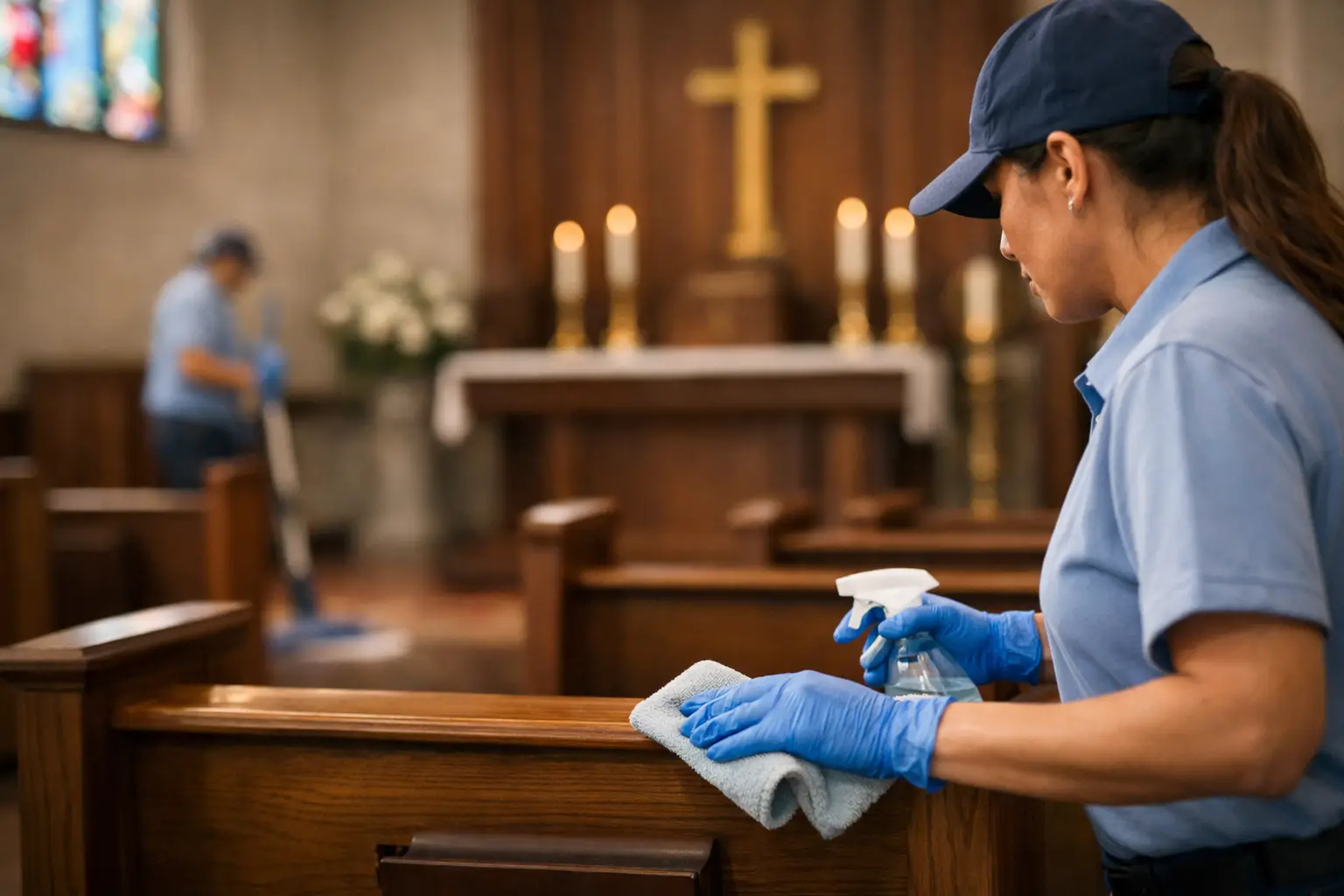
A sanctuary can look pristine on Sunday morning and still need a far more deliberate cleaning plan than most people realize. Church cleaning services support the full life of a religious facility – worship services, classes, offices, fellowship meals, youth programs, community outreach, and special events – without disrupting the people who rely on those spaces.
For church administrators, facilities directors, and property managers, cleanliness is not simply about appearance. It affects first impressions, member comfort, staff productivity, health, and confidence in the institution’s stewardship of its building. A reliable cleaning partner helps maintain that standard week after week, including during the busiest seasons of the church calendar.
Why Churches Need a Professional Cleaning Plan
Church facilities have a distinct operating rhythm. Traffic often peaks on weekends, but the building may remain active throughout the week with preschool programs, Bible studies, counseling sessions, choir practice, meetings, and rentals. Cleaning needs can change quickly after a large gathering, a funeral reception, or a multi-day vacation Bible school program.
That is why a generic approach rarely works. A professional program should account for which areas receive the most use, when rooms can be serviced, and where sanitation requires extra attention. The sanctuary may need careful vacuuming and dusting, while restrooms, kitchens, nurseries, and fellowship halls may require more frequent disinfecting and detailed cleaning.
A well-maintained facility also communicates respect. Visitors often make assumptions about an organization based on what they see in its entryway, restrooms, and gathering spaces. Clean floors, fresh restrooms, dust-free seating, and orderly common areas help guests feel welcomed before a service or event even begins.
What Church Cleaning Services Should Cover
Every congregation has different priorities, but recurring church cleaning services should begin with a detailed facility assessment. This allows the cleaning provider to identify the building’s square footage, layout, flooring types, high-traffic zones, security requirements, and service schedule. The result should be a written cleaning checklist rather than a vague promise to clean as needed.
Worship and Common Areas
Sanctuaries, chapels, lobbies, narthexes, hallways, and meeting rooms benefit from consistent dusting, vacuuming, mopping, and trash removal. Attention to details matters in these spaces. Fingerprints on glass doors, debris at entrances, dusty baseboards, and marked flooring can undermine an otherwise well-kept environment.
Seating requires special consideration. Pews and upholstered chairs collect dust, food particles, and debris over time, especially where multiple services or events are held each week. Routine vacuuming and periodic upholstery or carpet cleaning can extend the life of these furnishings while improving the appearance of the room.
Restrooms, Nurseries, and Children’s Areas
Restrooms are among the clearest indicators of facility care. They need replenished supplies, clean fixtures, disinfected touchpoints, polished mirrors, and odor control. In high-use buildings, once-a-week attention may not be enough. Service frequency should reflect the number of attendees, weekdays of operation, and whether the building hosts a school, daycare, or community programs.
Children’s ministries and nurseries require an even more careful approach. Toys, tables, check-in counters, door hardware, and restroom surfaces are touched frequently. Cleaning teams should use appropriate products and procedures for the space, following the facility’s requirements and minimizing unnecessary exposure to harsh chemicals.
Fellowship Halls and Kitchens
Fellowship halls can shift from worship overflow space to dining room, classroom, event venue, or disaster-relief staging area in a matter of days. Floors, tables, chair storage, trash areas, and entry points need dependable attention. If meals are served, crumbs, spills, and waste can quickly create sanitation concerns and attract pests.
Commercial or residential-style kitchens also need a defined cleaning scope. A janitorial team can address floors, surfaces, trash, and general upkeep, while specialized food-service cleaning tasks may require separate planning. Clear expectations prevent gaps in responsibility and help church leaders protect one of the building’s highest-risk areas.
Cleaning Around the Church Schedule
The best cleaning plan fits the ministry calendar instead of forcing staff to work around the cleaning crew. For many churches, evening cleaning after weekday activities or weekend service after Sunday gatherings makes sense. Others need daytime porters or multiple visits each week because their campuses remain occupied.
Frequency depends on the facility. A large church with classrooms, offices, and daily programs may need cleaning three to six days per week or more. A smaller worship-focused building may require fewer recurring visits, supplemented by deeper cleaning before major holidays, conferences, or high-attendance events.
Flexibility is valuable, but it should not mean inconsistency. The provider should know which rooms are off-limits, how to access the building, who to contact after hours, and what to do when an event changes the normal schedule. Formal onboarding and clear communication make those details manageable rather than leaving them to chance.
The Value of Accountability in Church Cleaning
Religious institutions often rely on volunteers for important work, but volunteer cleaning alone can be difficult to sustain in a large or heavily used facility. Responsibilities may be unclear, tasks may be missed, and deep cleaning can be postponed when people are needed elsewhere. Professional support gives church leadership a dependable foundation without replacing the contribution of committed volunteers.
Accountability begins with trained teams, documented tasks, and field management. It also requires a clear process for reporting concerns and correcting issues quickly. If a restroom needs extra attention before a large event or a spill occurs after a fellowship meal, leaders should know exactly whom to contact.
Colonial Commercial Cleaning approaches this process with on-site facility assessments, custom cleaning plans, formal onboarding meetings, and cleaning checklists designed around each property’s needs. For facilities in Northern Virginia, Washington, D.C., and Maryland, that structure helps leaders maintain a clean, welcoming building while keeping their focus on ministry and operations.
Choosing the Right Cleaning Partner
Cost matters, but the lowest quote is not always the best value. An unusually low price may reflect limited labor, vague service expectations, or a schedule that does not match actual traffic. A better comparison looks at what is included, how often each area is serviced, whether supplies are provided, and how quality is managed.
Before selecting a provider, ask how the team handles security, background expectations, keys or access codes, after-hours entry, and urgent needs. Discuss whether the company has experience with carpeted sanctuaries, multi-use fellowship spaces, schools, daycares, and offices. These details affect both cleaning quality and daily peace of mind.
It is also wise to ask how the provider measures performance. A checklist is useful, but it is only effective when someone reviews the work and responds when conditions change. Churches benefit from a partner that treats the facility as an active environment, not a static building with the same needs every night.
Protecting the Building Between Services
Recurring cleaning works best when church staff and ministry leaders reinforce basic habits during the week. Designated waste areas, promptly addressed spills, stocked restroom supplies, and clear room-reset expectations reduce wear on the facility. These practices also help cleaning teams spend their scheduled time on thorough work rather than avoidable cleanup.
Seasonal planning makes a difference as well. Easter, Christmas, weddings, graduations, conferences, and community events often bring more guests and more pressure on restrooms, entrances, carpets, and gathering spaces. Scheduling extra service before and after these occasions protects the experience for visitors and reduces the burden on staff.
A clean church does more than prepare a room for the next service. It gives every guest, volunteer, employee, and member a practical sign that the facility is cared for. With a cleaning plan that matches the building’s real schedule and traffic, leaders can welcome people with greater confidence every day of the week.