

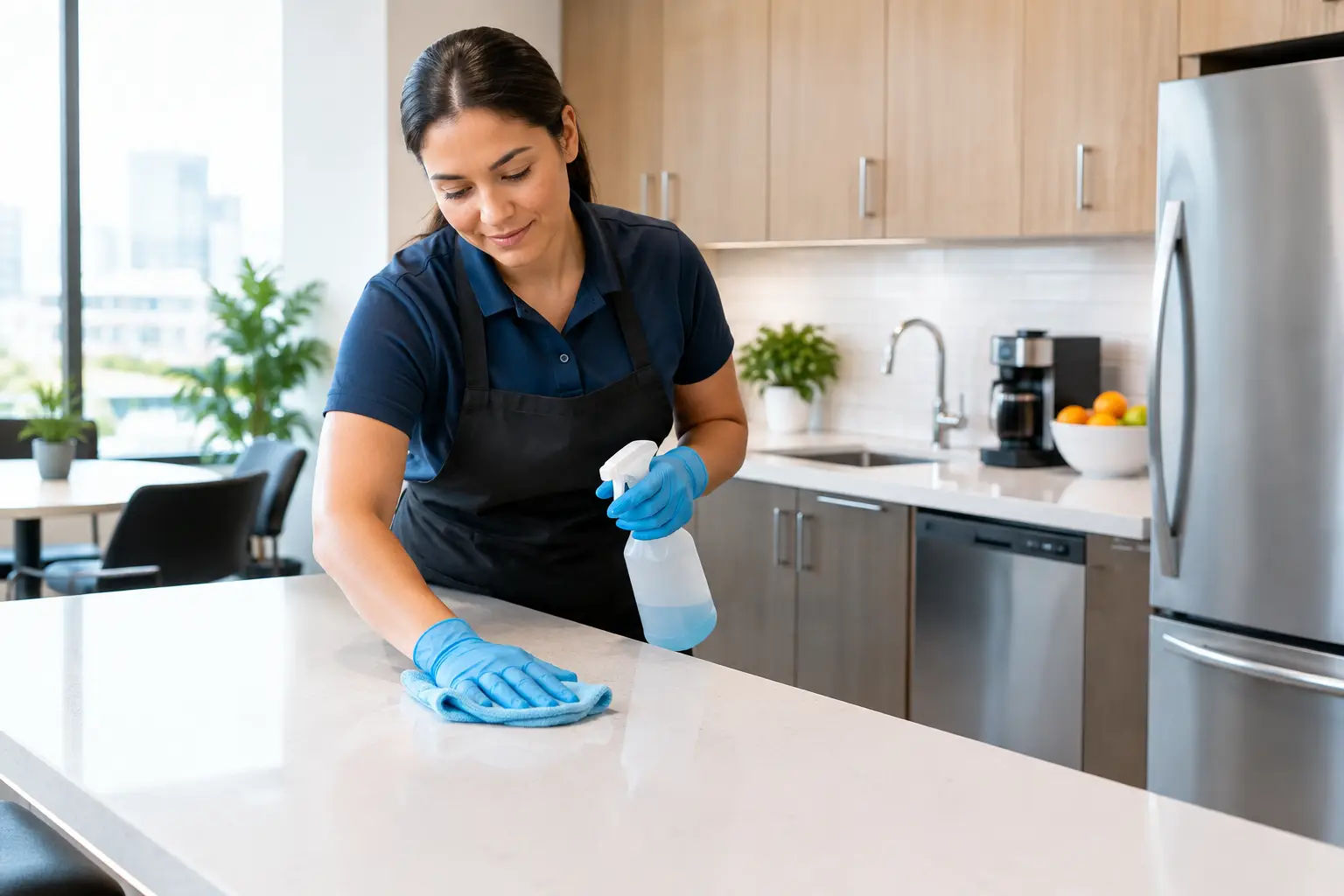
The office kitchen is often one of the highest-traffic rooms in a workplace, yet it can receive less attention than restrooms, lobbies, and conference rooms. Learning how to clean office kitchens properly helps prevent odors, pests, cross-contamination, and the employee frustration that follows when shared spaces feel neglected. For facilities managers and office leaders, the goal is not simply a kitchen that looks tidy at 8 a.m. It is a sanitary, reliable space that remains welcoming through every coffee break, lunch rush, and client visit.
Start With a Kitchen-Specific Cleaning Plan
An office kitchen should not be treated as a standard break room. Its cleaning needs depend on employee headcount, food preparation habits, available appliances, operating hours, and whether visitors or tenants use the space. A small staff kitchenette may need focused attention once each day, while a large corporate cafeteria or multi-tenant pantry may require service several times throughout the day.
Begin with a walkthrough of the kitchen and identify the areas that create the greatest sanitation risk. These typically include sinks, countertops, microwave handles, refrigerator pulls, cabinet handles, coffee stations, shared condiment areas, tables, and trash receptacles. Also look for overlooked surfaces such as the tops of refrigerators, the underside of tables, baseboards, and the space behind movable equipment.
A written cleaning checklist creates accountability. It defines what must be completed, how often it must be completed, and who verifies the work. For a professionally managed facility, that checklist should be adjusted when staffing levels, traffic patterns, or office schedules change. A kitchen used by 20 employees has different needs than one serving 200 people across multiple shifts.
Separate Daily Care From Periodic Deep Cleaning
Daily cleaning keeps the kitchen functional and presentable. It should remove food debris, empty waste, clean shared touchpoints, and address visible spills before they become stains or slip hazards. Periodic deep cleaning handles buildup that daily service cannot fully address, including grease around appliances, refrigerator interiors, grout, cabinet fronts, vents, and flooring edges.
The right frequency depends on use. Offices with catered meals, frequent employee events, or extended hours may need daily kitchen service plus a more detailed weekly cleaning. Lower-traffic offices may require a lighter daily routine and a scheduled deep clean every month or quarter. What matters is setting a standard that reflects the actual use of the space, rather than relying on a generic schedule.
How to Clean Office Kitchens Each Day
A daily routine should move from cleaner areas to dirtier areas. This helps avoid carrying food residue or bacteria from sinks and trash stations onto tables, counters, or appliance handles. Staff should use clean, designated cloths and tools for food-service areas and follow product label directions for dilution and disinfectant contact time.
First, remove visible debris from tables, counters, and floors. Clear abandoned food containers, cups, and expired items left in common areas. Empty trash and recycling before bags overflow, then replace liners and wipe down the inside and outside of receptacle lids. Food waste that remains overnight is one of the fastest ways to create odor and pest concerns.
Next, clean food-contact and high-touch surfaces. Countertops, tables, sink fixtures, refrigerator handles, microwave buttons, coffee machine controls, and cabinet pulls should be cleaned with the appropriate product. When disinfecting is required, surfaces need to remain wet for the product’s stated dwell time. A quick spray and immediate wipe may make a surface look clean, but it may not provide the intended sanitizing or disinfecting result.
Pay special attention to the sink. Food particles and standing water can lead to unpleasant smells and clogged drains. Remove debris from the drain area, clean the basin and faucet, and dry surrounding surfaces when possible. If employees use dish racks, they should be kept clean and organized so wet dishes do not sit in pooled water.
Finish with the floor. Sweep or vacuum loose debris before damp mopping, especially around trash bins, refrigerators, vending areas, and under tables. Use wet-floor signs whenever floors are being mopped during occupied hours. In busy workplaces, scheduling floor care before opening, after lunch, or after close can reduce disruption and lower the risk of slips.
Give Appliances the Attention They Need
Office appliances are frequent sources of hidden buildup. A microwave may look acceptable from a distance while its interior contains splattered food that creates odors and hardens over time. Clean the interior, turntable, handle, buttons, and exterior daily when use is heavy. For stubborn residue, use a food-safe method appropriate for the appliance manufacturer’s guidance rather than harsh tools that can damage interior surfaces.
Refrigerators require clear ownership. A regular cleaning schedule works only if employees know when unlabeled or expired food will be removed. Many offices establish a weekly cleanout time, provide labels or markers, and communicate the policy in advance. During the cleanout, remove abandoned items, wipe shelves and drawers, clean handles and door seals, and check for spills beneath containers.
Coffee stations also deserve close attention. Grounds, sugar, creamers, and drips collect quickly around machines and can make an otherwise clean kitchen appear poorly maintained. Wipe the machine exterior, clean surrounding counters, empty drip trays as needed, and restock approved supplies. If a machine requires descaling or internal maintenance, assign that task to the appropriate employee, vendor, or trained service provider.
Prevent Cross-Contamination and Odors
The products and methods used in an office kitchen matter. Not every surface needs the same chemical, and using an unsuitable product can damage finishes or leave residue where food is handled. Use products that are appropriate for the surface and task, and store them away from food, dishes, and employee supplies.
Color-coded cloths and mops can help prevent cross-contamination when a cleaning team services restrooms, kitchens, and common areas during the same shift. Kitchen tools should be clean, clearly designated, and laundered or replaced regularly. Reusing a soiled cloth across counters and appliance handles spreads contamination rather than removing it.
Odor control begins with sanitation, not fragrance. If an office kitchen consistently smells unpleasant, investigate the cause: food waste, spills beneath appliances, dirty drains, refrigerator leaks, full trash containers, or soiled mop heads are common contributors. Air fresheners may cover the issue temporarily, but they do not resolve the source. Consistent cleaning, timely waste removal, and periodic detailed service produce a better and more professional result.
Set Expectations for Employees and Cleaning Teams
A professional cleaning program works best when users of the kitchen understand their role. Employees should be encouraged to clean up personal spills, label refrigerator items, remove food at the end of the week, and avoid leaving dishes in the sink. These expectations should be reasonable. Employees are not a substitute for scheduled janitorial service, particularly in high-traffic offices, but their cooperation helps the space stay cleaner between visits.
Cleaning teams need equally clear direction. A vague instruction to “clean the break room” leaves too much room for inconsistency. Specify the scope, frequency, approved products, access procedures, and escalation process for maintenance issues. For example, a leaking refrigerator, pest activity, clogged drain, or damaged flooring should be reported promptly instead of being treated as a routine cleaning problem.
Field oversight is especially valuable in larger facilities or properties with multiple kitchens. Regular inspections help verify that the checklist is being completed, supplies are stocked, and standards remain consistent as the workplace changes. This level of accountability protects the facility’s presentation and gives managers a clear point of contact when needs arise.
Know When Your Kitchen Needs More Than Routine Service
Some conditions signal that a deeper service is overdue. Sticky floors, recurring odors, stained grout, grime around appliance bases, overflowing trash, and visible buildup behind equipment are not merely cosmetic concerns. They can affect employee confidence, attract pests, and make a workplace feel less cared for.
A deep cleaning may include detailed appliance exterior cleaning, interior refrigerator sanitation, degreasing, floor-edge cleaning, cabinet and drawer wipe-downs, high dusting, and attention to walls, vents, and baseboards. The scope should reflect the kitchen’s condition and materials. For example, natural stone counters, stainless steel finishes, and specialty flooring may require specific products and techniques to avoid damage.
For offices across Northern Virginia, Washington, D.C., and Maryland, Colonial Commercial Cleaning can build kitchen cleaning into a customized recurring janitorial plan, with service frequency and detailed tasks aligned to the way your facility operates. A clean office kitchen should feel dependable to the people who use it every day, even when no one is thinking about the work required to keep it that way.