

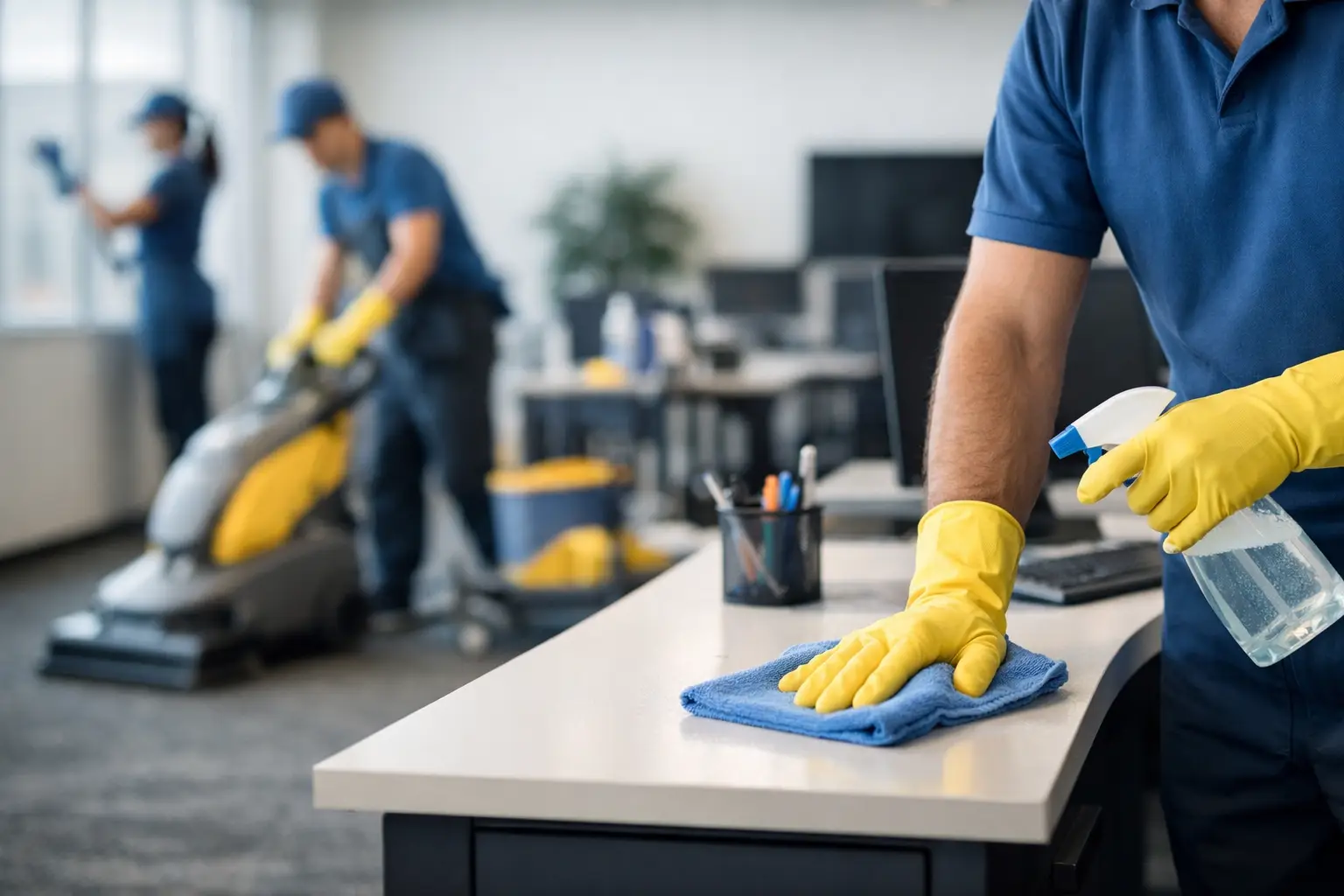
A lobby can look orderly at 8 a.m. and still carry weeks of buildup in carpet fibers, touchpoints, restrooms, and hard-to-reach areas. That is where workplace deep cleaning services make a measurable difference. For facilities with steady employee, visitor, student, patient, member, or customer traffic, deep cleaning is not a cosmetic extra. It is a planned reset that supports sanitation, presentation, and confidence in the spaces people use every day.
Recurring janitorial service keeps a facility presentable between visits. Deep cleaning addresses the work that requires more time, equipment, detail, and access than a routine nightly checklist allows. The right schedule depends on your building’s use, traffic patterns, and hygiene requirements, but delaying this work too long often makes routine maintenance harder and more expensive.
What Workplace Deep Cleaning Services Address
Deep cleaning focuses on areas where soil, residue, and germs accumulate outside the scope of standard daily service. In a professional environment, the goal is not simply to make a building look cleaner. It is to improve the condition of the surfaces, fixtures, and high-contact areas that shape the experience of everyone who enters.
A thorough service may include detailed restroom cleaning and disinfection, high-touch surface treatment, break room sanitation, carpet care, floor-edge cleaning, baseboards, glass, doors, vents, and hard-to-reach corners. It can also address buildup around fixtures, partitions, furniture, and equipment where routine cleaning may be limited by time or building activity.
The exact scope should be tailored to the facility. A daycare may need more frequent attention to shared surfaces and low-level touchpoints. A healthcare facility may require a more rigorous disinfecting approach and careful coordination around patient care. A bank or credit union may prioritize polished customer areas, glass, flooring, and security-conscious scheduling. There is no one-size-fits-all deep clean that serves every operation equally well.
Signs Your Facility Is Due for a Deep Clean
Facility managers often recognize the need before they can name it. Floors may appear dull shortly after mopping. Restrooms may develop persistent odors despite regular service. Carpets may hold visible traffic patterns, and dust may collect along vents, ledges, or baseboards that are not part of everyday cleaning routes.
Operational changes are another clear trigger. A deep clean is often appropriate after construction work, a renovation, a busy event season, an illness outbreak, a staffing transition, or a period of unusually heavy traffic. It can also be valuable before an audit, inspection, open house, leadership visit, or major client event.
Pay attention to what employees and visitors notice. Complaints about restrooms, odors, dust, or dirty entryways are not minor presentation issues. They can affect employee comfort, visitor trust, and the perception of how carefully the organization manages its workplace.
Why Routine Janitorial Service Is Not Always Enough
A recurring cleaning program is essential, especially in facilities that need service three or more days each week. However, routine teams work within a defined schedule designed to keep core areas consistently clean and ready for use. Deep cleaning requires a different level of time, detail, and sometimes specialized equipment.
For example, vacuuming preserves a carpet’s appearance between professional extractions, but it cannot remove all embedded soil. Mopping maintains hard floors, but it may not reach the buildup at edges, around fixtures, or in grout lines. Wiping high-touch surfaces helps manage daily contamination, while a detailed disinfecting service can provide more complete attention to overlooked contact points.
The strongest approach is usually not choosing between recurring cleaning and deep cleaning. It is building both into a practical maintenance plan. Routine service protects day-to-day standards. Scheduled deep cleaning helps prevent gradual decline in the areas that daily service cannot fully restore.
Building a Deep Cleaning Schedule Around Your Operations
The right frequency is based on risk, traffic, and the way each area is used. A busy medical office, fitness center, school, or religious institution with multiple weekly gatherings may need detailed cleaning more often than a low-traffic administrative office. Facilities with food service, shared equipment, young children, or frequent public visitors also tend to need closer attention.
Rather than scheduling deep cleaning only when conditions become noticeable, build it into the annual facility plan. Quarterly service may work well for some common areas. High-traffic restrooms, break rooms, entryways, and carpets may benefit from more frequent detailed attention. Seasonal timing can also be practical, particularly after winter weather, before a new school term, following a major event calendar, or ahead of a busy visitor season.
Scheduling matters as much as scope. A qualified commercial cleaning partner should work around your building’s operations, whether that means evenings, early mornings, weekends, or phased service by floor or department. Deep cleaning should improve the workplace without disrupting staff, clients, worship services, classes, or patient care.
What to Expect From a Professional Deep Cleaning Partner
A productive service relationship begins with an on-site assessment. Before proposing a scope, the cleaning provider should understand the building layout, square footage, traffic flow, floor types, access requirements, security procedures, and areas of particular concern. This prevents vague quotes and helps establish realistic expectations from the start.
A written scope and cleaning checklist are especially important for large facilities. They clarify what will be cleaned, which areas require special attention, what supplies or equipment are needed, and how the work will be verified. For organizations with multiple decision-makers, this level of documentation creates accountability and makes it easier to track results over time.
Look for trained, field-managed teams rather than an arrangement that depends on one individual working without oversight. The provider should be able to communicate clearly, respond to issues promptly, and coordinate service around your schedule. Access to support outside regular business hours is also valuable when a facility issue cannot wait until the next day.
At Colonial Commercial Cleaning, deep cleaning plans are developed around each facility’s operating needs, with detailed onboarding and service expectations designed to support long-term consistency. That structure matters because high standards are easier to maintain when the cleaning team understands the building, the priorities, and the people responsible for it.
Areas That Deserve Extra Attention
Some areas repeatedly influence how clean a workplace feels and how well it functions. During a deep clean, these spaces should be reviewed carefully:
- Restrooms: Fixtures, partitions, dispensers, walls, floor edges, grout, and odor-prone areas require more than a quick daily wipe-down.
- Entrances and lobbies: Glass, doors, mats, flooring, corners, and reception surfaces create an immediate impression for visitors.
- Break rooms and kitchens: Appliances, handles, tables, cabinet fronts, sinks, and shared touchpoints can accumulate residue quickly.
- Carpeted areas: Entrances, corridors, conference rooms, and workstations often hold embedded soil that affects appearance and indoor comfort.
- High-touch surfaces: Door handles, switches, rails, elevator buttons, shared equipment, and desk-adjacent surfaces need careful attention based on facility use.
Not every item requires the same frequency. A deep cleaning plan should prioritize the areas with the greatest traffic, sanitation sensitivity, or effect on visitor perception.
Measuring the Value Beyond Appearance
The value of deep cleaning is easier to see when it is connected to operations. Cleaner carpets and floors can help protect facility finishes. Detailed restroom care can reduce recurring odor concerns. A better-maintained environment can support employee comfort and give visitors confidence that the organization pays attention to its standards.
There are practical trade-offs to consider. A highly detailed service may require more downtime, a phased schedule, or access to areas after hours. Specialty floor care and carpet extraction may need drying time. These are not reasons to skip the work. They are reasons to plan it with a provider that understands commercial operations and can sequence the service responsibly.
For property managers, administrators, and facilities directors, the most useful question is not whether a deep clean is needed eventually. It is whether the current plan is protecting the building before small concerns become visible problems. A well-timed deep clean keeps your facility ready for the people who depend on it, even when no one is looking closely.