

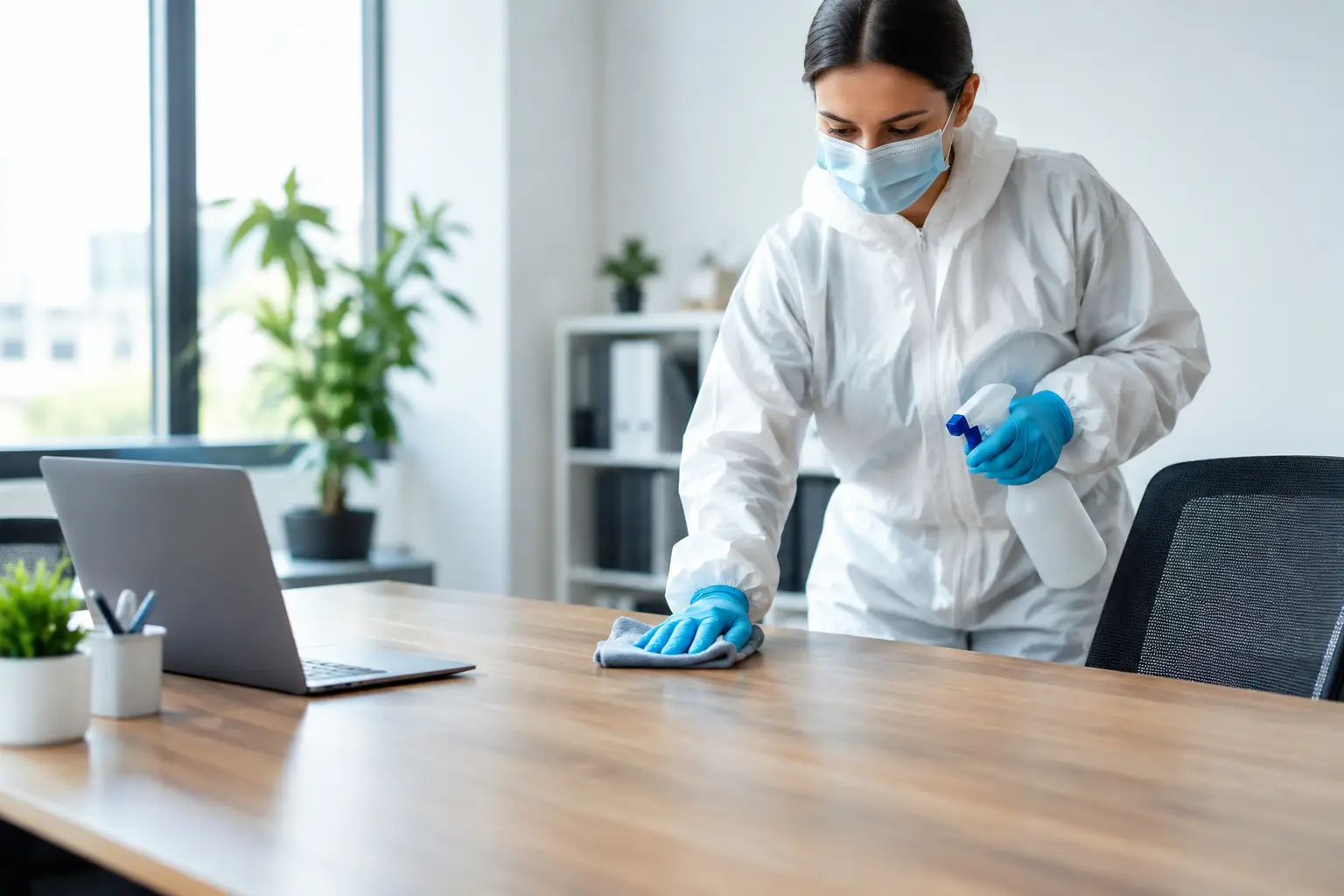
A clean lobby can make a strong first impression, but disinfection decisions should be driven by more than appearance. When should offices be disinfected? The answer depends on occupancy, touchpoint volume, the type of work performed, and whether a specific health concern has emerged. For most professionally managed workplaces, the right approach is a planned schedule with the flexibility to respond quickly when conditions change.
Disinfection is not a substitute for routine cleaning. Cleaning removes visible soil, dust, debris, and many germs from surfaces. Disinfection uses an appropriate product and contact time to inactivate germs on pre-cleaned hard surfaces. Facilities need both, coordinated in a way that protects people without interrupting operations or applying unnecessary chemicals.
When Should Offices Be Disinfected?
Offices should be disinfected on a recurring schedule when they have regular employee and visitor traffic, especially in shared spaces where people repeatedly touch the same surfaces. High-touch points deserve the most attention: door handles, elevator buttons, reception counters, light switches, shared keyboards, conference tables, break room fixtures, restroom hardware, and copier controls.
For a standard office with consistent weekday occupancy, disinfecting high-touch surfaces each business day is usually appropriate. Restrooms, break rooms, reception areas, and other common spaces may need service more than once a day if traffic is heavy. A small professional office with limited visitors may need a different cadence than a multi-tenant building, call center, financial institution, or busy administrative headquarters.
The goal is not to use one generic frequency for every room. It is to match the plan to how people actually use the facility.
Daily disinfection for shared, high-contact areas
Daily disinfection is a practical baseline for offices with employees working on-site, clients arriving throughout the day, or shared amenities. This is particularly relevant in common areas where one person’s contact becomes another person’s exposure within minutes.
Reception spaces need close attention because they set the tone for visitors and often include shared pens, counters, seating arms, doors, and payment terminals. Conference rooms need attention after heavily attended meetings, especially when teams rotate through the room. Break rooms and restrooms deserve daily disinfection because moisture, food handling, and frequent hand contact create a higher sanitation demand.
In a facility with several shifts or extended operating hours, daily may mean service during the day as well as after closing. The appropriate timing should support your staff and visitors, not create obstacles around their work.
Increase service after a known illness or exposure
A reported contagious illness among employees is a clear reason to increase disinfection. Focus first on the spaces used by the affected individual, including their workstation, nearby shared equipment, restrooms, break areas, meeting rooms, and common pathways. The response should be thoughtful rather than performative. Cleaning every surface in a large building without considering where the person worked can waste time and leave priority areas under-addressed.
The exact scope depends on the illness, building layout, the person’s movements, and current public-health guidance. In many cases, routine cleaning and targeted disinfection of high-touch and occupied areas are sufficient after time has passed. In other cases, particularly in healthcare-adjacent settings, daycares, schools, or spaces serving vulnerable populations, a more comprehensive response may be warranted.
A trained commercial cleaning partner can help facilities leaders document the response, use appropriate disinfectants, and schedule the work with minimal disruption. This matters when employees, tenants, parents, patients, or visitors expect clear evidence that the facility has acted responsibly.
Events That Call for Additional Disinfection
A regular schedule provides consistency, but several operational triggers call for extra attention. These are not edge cases. They are normal parts of managing an active commercial property.
- A large meeting, training session, open house, or client event brings a concentrated volume of hand contact to entrances, restrooms, meeting rooms, and food-service areas.
- Seasonal illness spikes can increase absenteeism and concern among employees, particularly when workstations and shared equipment are used by multiple people.
- A spill involving bodily fluids requires immediate, properly trained response rather than standard janitorial service.
- Construction, renovation, or maintenance work can introduce dust and disruption that call for deep cleaning before employees return to the affected area.
- Weather events can increase moisture and debris at entrances, creating both cleanliness and safety concerns.
After an event, disinfection should be paired with the basic cleaning needed to remove soils from surfaces first. A disinfectant cannot reliably do its job through food residue, grime, or visible buildup. This sequence is one reason a detailed cleaning checklist and trained technicians matter.
Build a Schedule Around Traffic, Not Assumptions
The most effective office disinfection plan begins with an on-site assessment. A facilities director may know the building’s square footage, but square footage alone does not show where the sanitation pressure exists. A 10,000-square-foot office with a lightly used private workspace has different needs than a similarly sized office with a busy reception desk, shared workstations, employee kitchen, and daily vendor traffic.
Start by identifying which spaces have the highest contact frequency and which areas serve the most people. Then consider when those spaces are busiest. A lobby may need attention after the morning arrival rush. Restrooms may require a daytime touch-up. A conference center may need rapid turnover cleaning between meetings.
Next, consider the people using the facility. Healthcare offices, schools, religious institutions, fitness centers, and daycares often have a lower tolerance for missed sanitation steps because they serve larger groups, children, older adults, patients, or community members. Banks and credit unions must also maintain a consistently polished and secure customer environment. In these settings, reliable execution is part of the organization’s reputation.
Finally, align the service plan with your operating schedule. Evening cleaning works well for many offices, but it is not the only option. Day porter support, staggered service, and targeted daytime disinfection can be more appropriate for high-traffic facilities. The right plan protects cleanliness standards while respecting confidential work, client appointments, and employee productivity.
What a Complete Disinfection Program Should Include
An office disinfection program should be specific enough that staff, managers, and cleaning teams know what is expected. Vague instructions such as “sanitize the office” leave too much room for inconsistent results.
A dependable program identifies the areas to be serviced, the required frequency, the approved products, and the process for reporting issues. It should also distinguish between routine tasks and response work after illness, spills, or special events. When a cleaning team is using disinfectants, product instructions matter. Surfaces generally need to remain wet for the manufacturer’s listed contact time, and teams need to avoid applying products to surfaces that are not compatible with them.
Documentation is useful as well. Facility managers should be able to review cleaning checklists, confirm service completion, and communicate changes without chasing down answers. Accountability becomes especially valuable when a building has multiple tenants, rotating schedules, or high visitor expectations.
Avoid Over-Disinfecting the Wrong Areas
More disinfection is not always better. Overuse of chemicals can create strong odors, leave residue, affect certain finishes, and frustrate employees who are sensitive to fragrances or cleaning products. It can also pull attention away from the basics: hand hygiene, stocked restroom supplies, clean floors, waste removal, and regular cleaning of shared spaces.
A better strategy is targeted, consistent work. Disinfect high-touch surfaces at the frequency your traffic requires. Clean less frequently touched surfaces as part of a recurring janitorial program. Increase service when there is a real trigger, such as a known illness, a major event, or unusual use of the building.
This approach is both practical and defensible. It shows employees and visitors that your organization takes health and cleanliness seriously without creating unnecessary disruption.
Make Disinfection Part of Facility Confidence
Office disinfection works best when it is not treated as an emergency-only service or a box to check after a complaint. It should be part of a broader cleaning plan that keeps restrooms presentable, floors safe, work areas orderly, and public spaces ready for the next person who walks through the door.
For facilities across Northern Virginia, Washington, D.C., and Maryland, Colonial Commercial Cleaning builds cleaning plans around real traffic patterns, operational hours, and the standards each property needs to maintain. A facility assessment can turn general concerns about office hygiene into a clear, accountable schedule that supports staff comfort, visitor confidence, and day-to-day operations.