
A reception counter wiped between visitors, a classroom reset after dismissal, and a restroom checked before a morning rush all send the same message: this facility is cared for. Commercial disinfection services help facility leaders maintain that standard in the places people touch, share, and rely on every day.
For properties with steady foot traffic, disinfection is not simply an occasional response to illness concerns. It is part of a disciplined cleaning program that supports employee comfort, visitor confidence, and the professional reputation of the organization. The right approach is practical, scheduled, and matched to how a facility actually operates.
When Commercial Disinfection Services Make Sense
Disinfection is most valuable when it addresses real exposure points rather than being applied broadly without a plan. Facilities with shared workstations, public-facing counters, common restrooms, classrooms, locker rooms, waiting areas, and high visitor turnover often need more attention than a standard surface-cleaning routine provides.
Healthcare offices, daycares, schools, gyms, hotels, religious institutions, and financial services locations each have different risks. A daycare may need frequent attention to shared toys, tables, and restroom fixtures. A bank may prioritize teller lines, entry doors, ATMs, offices, and customer seating. A large worship facility may need focused service before and after gatherings, especially in nurseries, restrooms, fellowship halls, and high-touch entry areas.
The need also depends on timing. A facility may require routine disinfection as part of a recurring janitorial plan, added support during cold and flu season, or a targeted deep-cleaning service after a confirmed illness concern. These are different scopes of work and should be quoted and scheduled accordingly.
A reliable provider begins by assessing the building, its occupancy, its traffic patterns, and its operating hours. That process prevents a common problem: paying for a generic service package that overlooks the spaces where employees and visitors actually spend their time.
Cleaning Comes Before Disinfecting
Cleaning and disinfecting are related, but they are not interchangeable. Cleaning removes visible soil, dust, spills, and many contaminants from a surface. Disinfecting uses an appropriate product to reduce certain germs on a properly cleaned surface.
This distinction matters because dirt and residue can limit the effectiveness of a disinfectant. A breakroom table with food residue, for example, should be cleaned before it is disinfected. The same principle applies to restroom fixtures, fitness equipment, desks, elevator buttons, and door hardware.
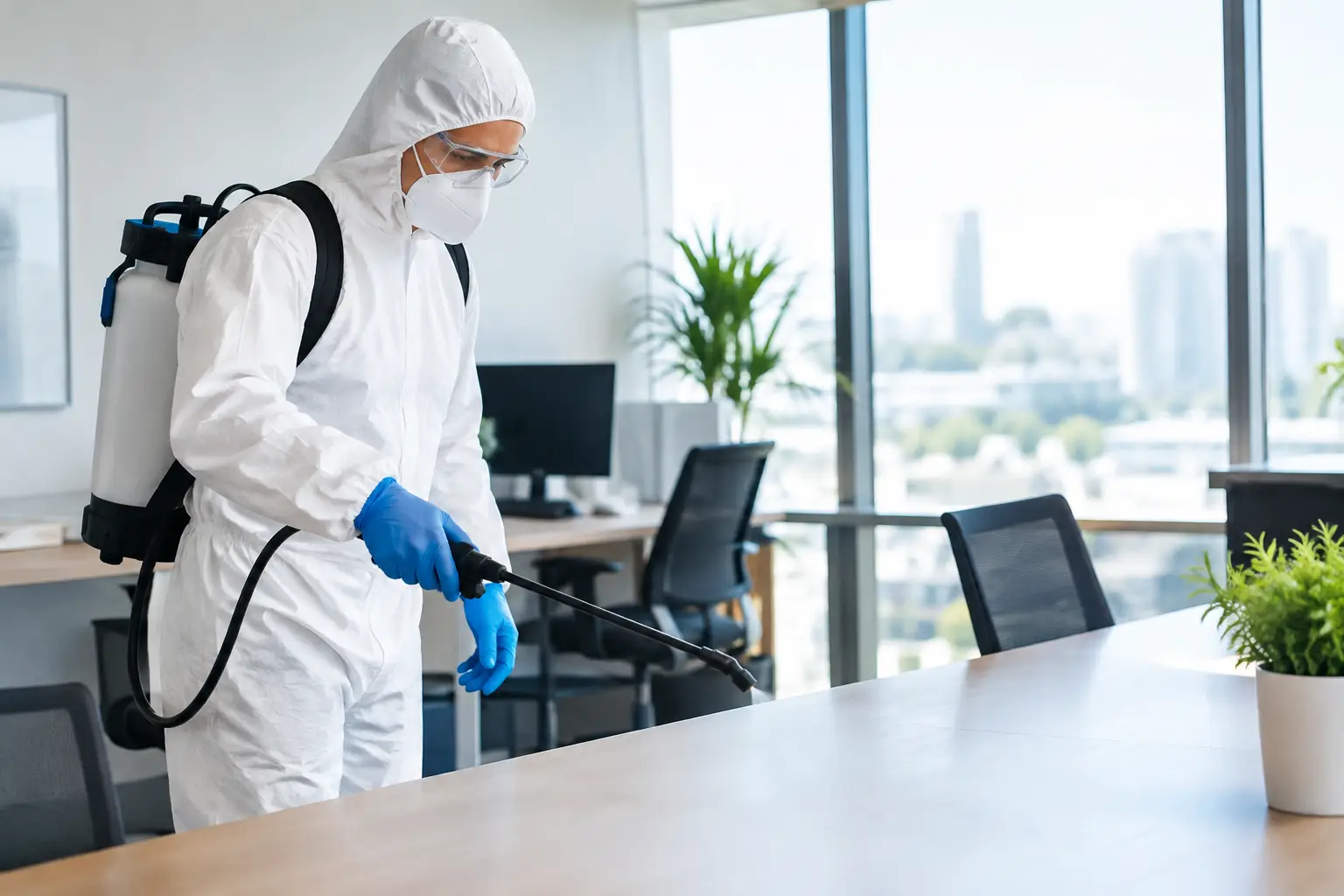
Professional teams should also follow product directions, including required contact time. Spraying a surface and immediately wiping it dry may not deliver the intended result. Staff need training on product selection, dilution where applicable, safe application, personal protective equipment, and the surfaces that require special care.
Disinfection is not a promise that illness will never occur in a building. It is one meaningful layer in a broader facility hygiene program that can also include hand hygiene supplies, waste removal, restroom maintenance, ventilation practices, and clear expectations for employees and visitors who are not feeling well.
Build the Plan Around High-Touch Areas
The most effective commercial disinfection services are tailored to a facility’s daily activity. Rather than treating every room with the same frequency, a sound plan identifies high-touch and high-traffic areas, then assigns the right level of service.
Common priorities include entry doors, reception counters, elevator controls, light switches, shared phones, desks, conference tables, breakroom appliances, restroom fixtures, handrails, and touchscreens. In many buildings, these details shape a visitor’s perception more than the square footage of the space.
Frequency should reflect use. A low-traffic executive office may need a different schedule than a public restroom used throughout the day. A school cafeteria after lunch service, a gym during peak hours, or a clinic waiting room may need more frequent attention than areas with limited access.
There is a trade-off to consider. Overly broad, constant disinfection can add cost and interrupt operations without delivering proportionate value. Too little attention to touchpoints can leave staff and visitors questioning the condition of the facility. A customized cleaning checklist helps establish a practical middle ground, with clear tasks, service frequency, and accountability for completion.
Schedule Around Your Operations
For many organizations, the best time for comprehensive work is after business hours or during periods of lower occupancy. This allows trained cleaning staff to work thoroughly without disrupting meetings, classes, guest experiences, patient care, or customer transactions.
Some facilities also benefit from daytime porter support. A porter can replenish restroom supplies, respond to spills, monitor common areas, remove waste, and disinfect key touchpoints during active hours. This is especially useful for high-traffic properties where the appearance and hygiene of shared spaces can change quickly.
The schedule should be flexible enough to accommodate special events, seasonal occupancy shifts, weather-related messes, and unexpected needs. Facility leaders should not have to start from scratch every time the building’s routine changes.
What to Expect From a Dependable Provider
A disinfection program is only as dependable as the people and systems behind it. For facility managers, the key question is not simply whether a vendor offers disinfection. It is whether the provider can deliver the agreed scope consistently, communicate clearly, and address concerns quickly.
Look for a service partner that conducts an on-site assessment before presenting a quote. A walkthrough creates a shared understanding of the building’s needs, access requirements, problem areas, and schedule. It also gives the cleaning team the information needed to develop a realistic plan instead of relying on assumptions.
Formal onboarding is equally valuable. Before service begins, the facility and cleaning provider should align on cleaning checklists, service times, building access, emergency contacts, supply responsibilities, quality expectations, and a process for reporting issues. These details may seem routine, but they are what keep a cleaning program consistent after the first week.
Field management and regular quality oversight matter as well. If a concern arises, building leaders need a clear point of contact and a responsive path to resolution. Accountability is not a marketing term. It is documented expectations, trained teams, inspection practices, and communication that makes it easier to maintain standards over time.
Match Service to Your Facility Type
A single disinfection routine does not fit every commercial property. Healthcare environments may require careful attention to waiting rooms, exam areas, administrative offices, and patient-facing surfaces. Schools and universities need plans that recognize classroom turnover, athletic spaces, cafeterias, and residence-related common areas.
Hotels must protect the guest experience across lobbies, public restrooms, meeting rooms, and staff areas while working around occupancy and event schedules. Museums and cultural institutions may have delicate materials and exhibits that require specialized cleaning methods. Religious facilities often need a plan that accommodates worship schedules, youth programs, community events, and variable weekly attendance.
The goal is not to apply more chemical product everywhere. The goal is to use appropriate methods in the right spaces, at the right frequency, with care for people, finishes, and the facility’s daily operations.
Questions to Ask Before Adding Disinfection
Before selecting a provider or adjusting your current program, ask how the scope will be documented and measured. Confirm which surfaces are included, how often they will be serviced, what happens when traffic increases, and who verifies that the work meets expectations.
Ask about staff training and whether technicians understand product instructions and contact times. Clarify how the team handles sensitive areas, secure spaces, and special materials. If your building operates beyond normal business hours, discuss access procedures and how service will be coordinated without interrupting your staff or visitors.
It is also reasonable to ask how the provider responds when an issue is reported. A dependable commercial cleaning partner should make it easy to communicate, not leave facility leaders chasing updates or repeating concerns.
For organizations across Northern Virginia, Washington, D.C., and Maryland, a thoughtful disinfection plan can protect more than surfaces. It helps employees feel supported, reassures visitors that details are being managed, and gives facility leaders greater confidence in the condition of the spaces under their care. The right program should fit quietly into the rhythm of your building while making a visible difference in how people experience it.