

A lobby carpet can look worn long before it has reached the end of its useful life. Grit tracked in from a parking lot, spills outside a break room, salt in winter, and heavy foot traffic all work deeper into the fibers with each passing day. Consistent carpet maintenance gives facility managers control over that wear, helping protect appearance, indoor cleanliness, and the budget for replacement.
For commercial properties, carpet care is not a once-a-year cleaning task. It is an operating routine that should reflect how people use the building. A school hallway, medical waiting area, bank branch, hotel corridor, and house of worship may all have carpeted spaces, but their traffic patterns, soil loads, and service windows are different. The right plan accounts for those differences before stains and wear become permanent.
Why Carpet Maintenance Is an Operational Priority
Carpet acts like a filter. It captures dust, dirt, allergens, and outdoor contaminants that enter a facility on shoes, wheels, and bags. That can help keep particles from circulating through the building, but only if the carpet is vacuumed and cleaned often enough to remove what it captures.
When soil remains in carpet, it does more than make the floor look dull. Fine, abrasive particles rub against the fibers under foot traffic. Over time, this can flatten pile, fade color, create dark walk paths, and shorten the carpet’s service life. Replacing broadloom carpet or carpet tiles across a large facility is a significant capital expense. Preventive care is generally far more manageable than replacing flooring early because routine cleaning was deferred.
Presentation matters as well. Visitors form opinions quickly in entryways, reception areas, hallways, and meeting spaces. Stained or heavily tracked carpet can suggest that other parts of the operation receive the same level of attention. For healthcare, education, financial services, hospitality, and religious facilities, a clean floor supports confidence in the entire environment.
Build a Commercial Carpet Maintenance Plan Around Traffic
A successful program begins with a site assessment, not a generic calendar. Identify high-traffic routes, entrances, elevator lobbies, corridors, waiting rooms, classrooms, and areas where food or beverages are present. These locations usually require more frequent attention than private offices or low-use conference rooms.
Start with daily soil removal
Frequent vacuuming is the foundation of carpet care. It removes dry soil before it is pressed down, ground in, or carried to another area. High-traffic carpet may need vacuuming every business day, while lower-traffic rooms may need less frequent service. The correct schedule depends on occupancy, weather, the amount of outdoor access, and whether the facility receives public visitors.
Vacuuming quality matters as much as frequency. A rushed pass with poorly maintained equipment will not remove enough embedded soil. Commercial-grade vacuums, clean filters, proper brush settings, and trained personnel make a visible difference, particularly in entrances and walkways.
Treat spots before they become stains
Spills should be addressed promptly with a method appropriate to the carpet fiber and the substance involved. Coffee, juice, food oils, ink, and tracked-in mud do not respond the same way. Using the wrong chemical or over-wetting an area can spread the stain, damage fibers, or leave residue that attracts more soil.
Staff should know who to notify when a spill occurs, especially in client-facing areas. A clear response process prevents a minor incident from becoming a permanent blemish. For facilities with children, patients, guests, or heavy food service activity, spot response should be part of the regular cleaning scope rather than an afterthought.
Schedule interim cleaning for busy areas
Interim cleaning addresses the areas that show wear first without requiring a full-building deep clean. Depending on the carpet type and conditions, this may involve low-moisture encapsulation, bonnet cleaning, or another suitable method. The goal is to lift soil from the carpet and improve appearance between restorative cleanings.
This approach can be especially useful for occupied facilities that cannot close large sections of flooring for long drying periods. Still, interim cleaning is not a substitute for periodic extraction. It works best as one part of a planned program.
Plan restorative cleaning before conditions force it
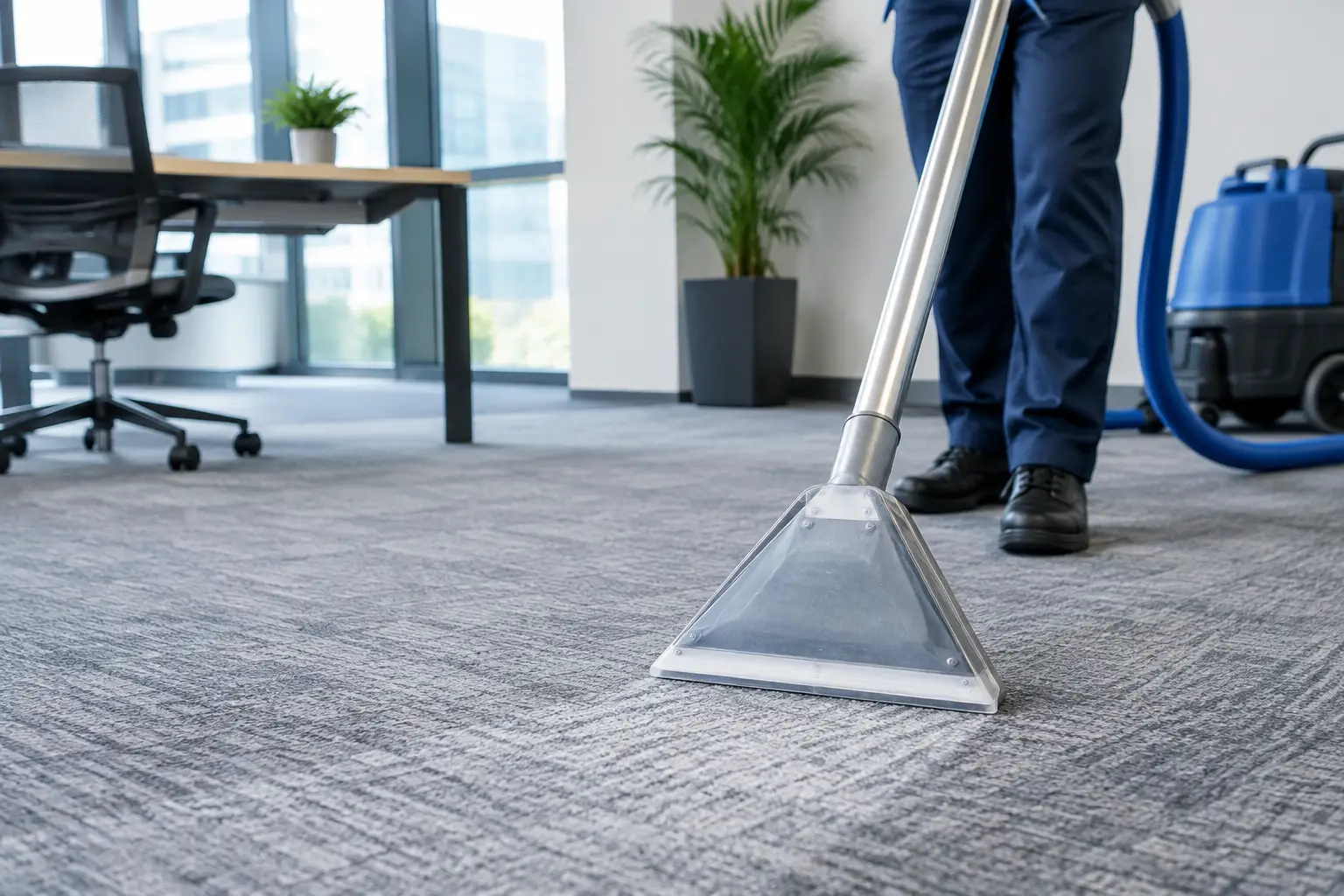
Hot water extraction, often called steam cleaning, is commonly used to remove deeper soil and residues from commercial carpet. The appropriate frequency varies. A busy lobby or childcare center may need restorative cleaning several times per year, while a low-traffic administrative suite may need it less often.
The timing should account for drying time, building occupancy, and special events. Cleaning immediately before a major event may not be practical if the carpet needs time to dry. A professional provider can schedule work during evenings, weekends, school breaks, or other lower-impact windows to reduce disruption.
Protect Entryways and Prevent Soil at the Source
The most effective carpet care often starts before people step onto the carpet. Entry matting reduces the amount of water, sand, salt, and debris that reaches interior flooring. Mats need regular cleaning and replacement when they no longer lie flat or capture soil effectively. Dirty mats can become part of the problem rather than a solution.
During wet weather and winter conditions, facilities should increase attention at entrances. Extra matting, more frequent vacuuming, and faster spot cleaning can prevent moisture and grit from spreading down hallways. In the Washington, D.C., Maryland, and Northern Virginia region, seasonal rain, snow, and road treatment materials can create particularly demanding conditions for commercial entryways.
Furniture placement also affects wear. Chairs that are frequently moved, rolling equipment, and narrow traffic routes can create concentrated damage. Use protective glides where appropriate, rotate movable furniture when practical, and address fraying seams or loose carpet edges promptly. Those small maintenance steps help prevent trip hazards and larger repairs later.
Choose Methods Based on Carpet, Not Convenience
Not every carpet should be cleaned with the same process. Carpet tiles, loop pile, cut pile, patterned carpet, and specialty fibers can have different care requirements. Manufacturer recommendations, warranty conditions, dye stability, adhesive systems, and existing stains all influence the right cleaning method.
A low-moisture process may be the best fit where rapid return to service is essential. Hot water extraction may be appropriate when deeper flushing is needed. In some cases, an area may need targeted stain treatment, odor treatment, or localized repair before routine cleaning will improve its appearance.
The trade-off is straightforward: the fastest method is not always the most restorative, and the most intensive method may require more planning. A qualified commercial cleaning partner should explain the recommended approach, expected drying conditions, and any limitations before work begins. Clear expectations protect both the facility and the flooring investment.
Make Accountability Part of the Carpet Care Program
Carpet maintenance can fail when responsibility is vague. If daily staff assume a janitorial team will handle a spill, while the cleaning team assumes it will be reported later, stains sit too long. If no one reviews traffic patterns after a building renovation or occupancy change, the service schedule can fall behind the facility’s actual needs.
A documented plan creates accountability. It should identify cleaning frequencies by area, spill-reporting procedures, periodic deep-cleaning windows, quality checks, and the person responsible for approving service. Managers should also track recurring problems, such as a frequently stained break room or a lobby that becomes heavily soiled after rain. Those patterns often point to a practical solution, whether it is improved matting, a changed cleaning frequency, or a different workflow.
For large or specialized facilities, field oversight adds another layer of confidence. Trained teams should understand which areas require discretion, infection-conscious practices, quiet service hours, or careful coordination with staff and visitors. Carpet cleaning should support daily operations, not interrupt them.
Signs Your Carpet Program Needs Attention
A carpet does not have to look severely neglected before it needs a different level of care. Darkened traffic lanes, recurring spots, lingering odors, flattened fibers, visible residue after vacuuming, and complaints about the appearance of common areas are all signals that the current schedule or method may not be sufficient.
It is also worth reviewing the plan after a change in occupancy, construction project, weather event, or new use of a room. A conference area converted into a training space or a school wing with increased enrollment will not have the same cleaning needs it had before.
Colonial Commercial Cleaning develops carpet care around each facility’s schedule, floor conditions, and traffic demands, with trained teams and clear service expectations. The goal is not simply cleaner carpet after a visit. It is a facility that stays ready for employees, visitors, and the work that happens there every day.
A well-maintained carpet rarely draws attention, and that is often the point. When floors remain clean, safe, and professional-looking, people can focus on the meeting, service, class, appointment, or event that brought them through your doors.