
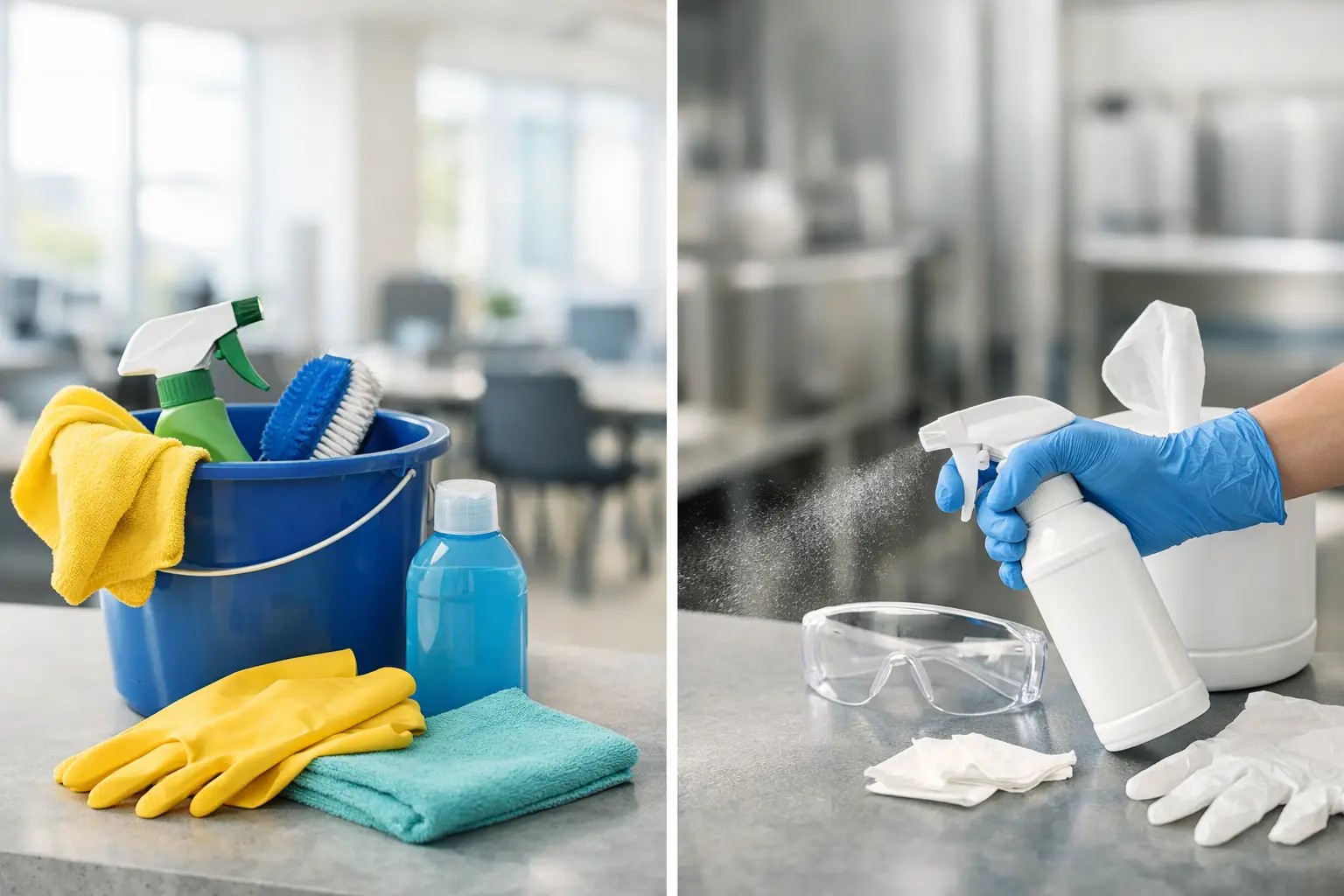
A receptionist wipes down a lobby counter between visitors. A custodian disinfects a restroom touchpoint after a high-traffic shift. Both tasks support a healthier facility, but they are not the same task. Understanding cleaning versus disinfecting helps facility leaders set the right expectations, protect occupants, and build a service plan that supports daily operations without wasting time or product.
For commercial properties, the distinction affects far more than the supply closet. It influences cleaning schedules, labor allocation, employee comfort, visitor confidence, and, in certain environments, compliance responsibilities. A clean-looking facility may still need targeted disinfection. Conversely, frequent disinfectant use cannot make up for poor routine cleaning.
Cleaning Versus Disinfecting: The Core Difference
Cleaning removes visible soil and many unseen contaminants from a surface. This can include dust, dirt, spills, food residue, oils, and debris. It is typically done with a cleaning solution, water, microfiber cloths, vacuums, mops, or other tools designed to lift and remove material.
Disinfecting uses an EPA-registered disinfectant to kill or inactivate specific germs on a surface. Depending on the product and its label, this may include certain bacteria and viruses. Disinfecting is not simply spraying a chemical and moving on. The product must be used on an appropriate surface, diluted correctly when applicable, and left wet for the label-specified contact time.
The practical difference is straightforward: cleaning removes what is on the surface; disinfecting addresses germs that may remain. In most professional settings, the strongest approach is sequential. First, remove soil and residue. Then disinfect high-touch or higher-risk surfaces as needed.
A disinfectant applied over grime, food residue, or a sticky film may not perform as intended. Soil can create a barrier between the disinfectant and the surface. It can also reduce the appearance of care, which matters in lobbies, classrooms, patient areas, worship spaces, and customer-facing offices.
Why Routine Cleaning Still Comes First
A well-maintained facility does not rely on periodic disinfection as its only hygiene measure. Routine cleaning controls the buildup that makes spaces look neglected, creates slip hazards, contributes to odors, and interferes with disinfectant performance.
In an office, routine work may include vacuuming carpets, removing trash, cleaning breakroom counters, wiping desks according to the client’s policy, servicing restrooms, and cleaning glass at entrances. In a school or daycare, it may involve removing tracked-in soil, addressing lunch spills, cleaning shared tables, and maintaining restroom fixtures throughout the day. In a healthcare setting, workflows are more specialized and must be aligned with the facility’s established protocols.
Cleaning also has a direct operational value. A clean floor lasts longer when abrasive dirt is removed. A cleaner carpet supports the appearance of a professional workplace. Restrooms that are consistently serviced are less likely to produce complaints that distract administrators, property managers, or front-office teams from more important work.
For facilities that operate six or seven days a week, consistency matters as much as the individual task. A detailed checklist, trained team members, and active field management help ensure critical areas are not missed when schedules become busy.
When Disinfecting Is the Right Next Step
Disinfecting should be targeted to the facility’s risk level, traffic patterns, and current conditions. It is particularly appropriate for high-touch surfaces and areas where illness exposure, bodily-fluid incidents, or close-contact activity increase concern.
Common high-touch points include door handles, push plates, elevator buttons, light switches, restroom flush handles, faucet handles, railings, shared equipment controls, reception counters, and breakroom appliance handles. In gyms, this may also include equipment handles, benches, and locker-room touchpoints. In financial institutions, it can include teller lines, writing stations, and commonly used pens or counter surfaces.
The right frequency depends on the building. A small administrative office with limited visitors may need scheduled touchpoint disinfection once per evening, plus response service when needed. A busy school, daycare, clinic, hotel, or public-facing facility may need touchpoints addressed multiple times during operating hours.
There is no one-size-fits-all answer, which is why a facility assessment is valuable. A professional cleaning partner should ask how many people use the space, when peak traffic occurs, which rooms are shared, whether vulnerable populations are present, and what service can be completed without disrupting business.
Contact Time Is Not Optional
One of the most common mistakes in disinfection is wiping a product away too quickly. Every disinfectant has label instructions that specify how long a surface must remain visibly wet to achieve the stated disinfecting claim. That period may vary by product and by the organism being addressed.
Using more chemical does not replace proper technique. Nor does a strong scent confirm that a surface has been disinfected. Professional teams should be trained to follow product labels, wear appropriate personal protective equipment, avoid mixing chemicals, and use products suitable for the surfaces in the facility.
This protects occupants and helps preserve finishes. Repeated use of an incompatible chemical can dull flooring, damage electronics, discolor fixtures, or shorten the life of specialty surfaces.
Build a Plan Around Your Facility, Not a Generic Checklist
The best commercial cleaning plans separate recurring cleaning tasks from targeted disinfecting tasks while allowing room for changing needs. The plan should identify what is cleaned daily, what is disinfected at set intervals, and what requires immediate response.
For example, a religious institution may need restrooms, nurseries, fellowship halls, and frequently touched entrances prioritized before and after major gatherings. A museum may need careful cleaning methods around delicate materials while maintaining public restrooms and guest touchpoints. A corporate office may prioritize conference rooms, kitchens, elevator areas, and lobby surfaces around employee schedules.
A useful scope of work should also account for service timing. Overnight cleaning may be ideal for a bank, office, or school. Day porter support may be more appropriate for a high-traffic hotel, fitness center, or multi-tenant property. In either case, the goal is the same: complete the work thoroughly while minimizing disruption to employees, visitors, students, patients, and guests.
Colonial Commercial Cleaning develops customized programs through on-site assessments, clear cleaning checklists, and formal onboarding so facilities across Northern Virginia, Washington, D.C., and Maryland have a practical standard for service and accountability.
Avoid the Two Most Common Gaps
The first gap is treating disinfecting as a substitute for cleaning. This often leads to residue, inconsistent results, and surfaces that look unprofessional even when they have been sprayed. A clean surface is the foundation for effective targeted disinfection.
The second gap is applying disinfectant everywhere, every time, without a reasoned plan. Overuse can increase chemical exposure, leave residue, consume labor hours, and create unnecessary wear on surfaces. It may also pull attention away from the basic cleaning work that keeps the building functional and presentable.
A balanced program directs effort where it has the greatest impact. Restrooms, breakrooms, touchpoints, and shared-use spaces may warrant frequent disinfection. Low-touch areas may primarily need regular cleaning and periodic detail work. During periods of elevated illness concern or after a known exposure, the plan can be adjusted to add targeted disinfection to relevant areas.
Questions to Ask Your Commercial Cleaning Provider
Before approving a cleaning or disinfecting program, facility leaders should understand how work will be performed and verified. Ask what products are used, whether they are EPA-registered for the intended disinfection purpose, and how technicians are trained on label directions and contact times.
It is also reasonable to ask how the provider documents recurring tasks, handles service requests, supervises teams, and responds if a concern is identified. In a multi-use facility, ask how the team adapts when schedules change for events, seasonal traffic, illness concerns, or inspections.
The answers should be specific. “We disinfect everything” is not a plan. A dependable provider can explain which areas receive attention, how frequently service occurs, what triggers additional work, and who is accountable for follow-through.
A Cleaner Facility Supports Confidence Every Day
Cleaning and disinfecting work best when they are treated as connected but distinct parts of facility care. Routine cleaning protects appearance, removes soil, and keeps the building ready for work. Targeted disinfection helps address germ concerns in the spaces and touchpoints where it matters most.
A thoughtful service plan gives facility leaders a clearer standard to manage: clean the entire environment consistently, disinfect based on risk and use, and adjust the work when the building’s needs change. That approach helps create a workplace, school, clinic, worship space, or public facility where people can focus on why they came through the door in the first place.