

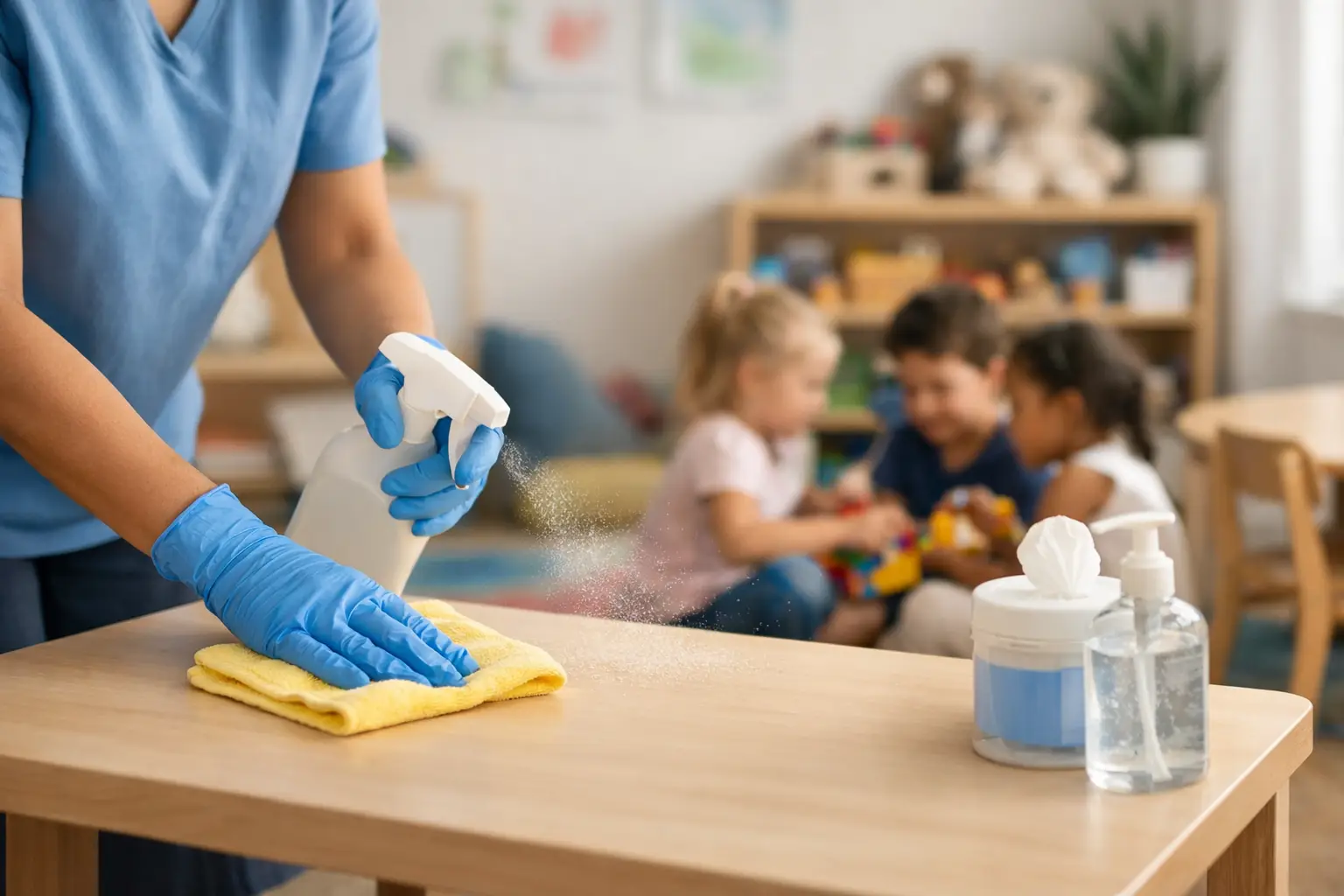
A toddler drops a teething toy, several children share a sensory table, and parents arrive within minutes for pickup. In a daycare setting, daycare cleaning and sanitizing is not a background task completed after hours. It is a daily operational responsibility that affects child wellness, staff confidence, family trust, and the center’s reputation.
Children explore with their hands, touch shared surfaces repeatedly, and are still learning healthy hygiene habits. That reality calls for a cleaning program built around traffic patterns, age groups, daily schedules, and clear accountability. A clean-looking classroom matters, but high-quality daycare cleaning goes further: it addresses the surfaces and spaces where germs are most likely to spread.
Why Daycare Cleaning and Sanitizing Require a Plan
A daycare facility has a different risk profile than a typical office. Classrooms, restrooms, nap areas, food-preparation spaces, entrances, and playground transition points all have distinct cleaning needs. A single, general checklist may leave critical gaps, especially when it does not account for how often particular rooms are used.
The distinction between cleaning, sanitizing, and disinfecting also matters. Cleaning removes visible soil, spills, dust, and debris. Sanitizing reduces germs on a surface to levels considered safer under public-health standards. Disinfecting uses an approved product to kill or inactivate a broader range of germs on hard, nonporous surfaces when the situation calls for it. These steps are related, but they are not interchangeable.
For example, a table with dried food, paint, or dirt must be cleaned before it can be effectively sanitized. Applying a disinfectant over a soiled surface can create a false sense of security. Products must also remain wet for the manufacturer’s required contact time. Rushing that step is one of the most common weaknesses in facility sanitation.
A dependable program identifies which tasks happen between activities, which are completed at the end of each day, and which require scheduled deep cleaning. It also establishes who verifies the work. For daycare administrators, that structure helps turn cleanliness from an ongoing concern into a managed process.
Focus on the Surfaces Children Actually Touch
High-touch surfaces deserve the most frequent attention because they can transfer germs quickly from one child to another. In a daycare, those surfaces extend well beyond doorknobs and light switches. Think classroom tables, chairs, cubbies, faucet handles, toilet flushers, changing stations, railings, activity bins, shared learning materials, and entry counters.
Toys need particular care. Hard, washable toys can generally be cleaned and sanitized on a rotation based on use, while mouthed toys should be removed from circulation promptly for cleaning and sanitizing before another child uses them. Soft toys, fabric play items, and dress-up clothing require laundering or a manufacturer-approved cleaning method. A center should avoid treating all toys alike simply because they are stored in the same room.
Food-service areas need a separate standard. Food-contact surfaces should be cleaned and sanitized using products and procedures appropriate for those surfaces. Staff should not use the same cloths, tools, or diluted solution from restroom cleaning in a kitchen or snack-prep space. Color-coded cloths and equipment can help reduce cross-contamination when used consistently.
Build Cleaning Around the Daycare Schedule
The best cleaning program supports the center’s routine instead of interrupting it. Staff may need to address spills, bathroom accidents, mouthed toys, and visibly soiled surfaces during operating hours. A professional cleaning team can then complete the recurring work that requires more time, equipment, and detailed attention after children leave or during agreed-upon low-traffic periods.
Daily service often includes restroom cleaning and sanitizing, floor care, trash removal, cleaning of classroom surfaces, break room or kitchen maintenance, and attention to entryways. Depending on the facility and its enrollment, some centers need service three or more days each week, while larger or higher-traffic programs may benefit from daily cleaning.
Periodic deep cleaning fills the gaps that routine service cannot always reach. Carpet extraction, detailed floor work, baseboard cleaning, upholstery care, high and low dusting, and detailed cleaning of storage areas can improve both hygiene and presentation. Deep cleaning is especially valuable before a new school year, after illness-related absences rise, or following special events that bring additional traffic into the building.
The right frequency depends on enrollment, building layout, number of classrooms, restroom count, meal service, age groups, and operating hours. An infant room, for instance, may need a different approach from an after-school room where older children use computers, sports equipment, and shared tables.
Use Products Safely and Consistently
A daycare cannot simply use the strongest product available. Cleaning chemicals should be appropriate for the surface, used according to label directions, stored securely, and kept out of children’s reach. Staff and cleaning technicians need training on dilution, personal protective equipment, ventilation, dwell time, and what to do if a spill occurs.
Fragrance is not proof of cleanliness. In fact, heavily scented products can be a poor fit for facilities serving young children or individuals with sensitivities. The goal is effective, responsible sanitation with products selected for the setting, not an overpowering chemical smell at morning drop-off.
Centers should also keep Safety Data Sheets accessible and maintain clear procedures for chemical storage. Professional providers should be able to explain the products and methods used in the facility, particularly in classrooms, restrooms, kitchens, and areas where children nap or play on the floor.
Make Accountability Visible
Parents may not inspect a cleaning log, but they notice the results. They see orderly entrances, clean restrooms, fresh floors, tidy classrooms, and whether staff appear confident in the center’s hygiene practices. Those everyday impressions shape trust, especially for families evaluating a daycare for the first time.
Behind that confidence should be a documented system. Cleaning checklists clarify the tasks expected in each space. Supervisor inspections help catch missed details before they become recurring problems. A communication process gives administrators a direct way to report concerns, request additional service, or adjust the plan when enrollment and usage change.
This is where a commercial cleaning partner should operate as more than an after-hours vendor. Colonial Commercial Cleaning begins with an on-site facility assessment to understand room use, traffic flow, scheduling constraints, and sanitation priorities. A custom plan, clear onboarding process, trained team, and field management create a stronger foundation for consistent results.
For administrators, the practical question is not whether a provider can mop floors and empty trash. It is whether the provider can follow a daycare-specific scope of work, protect the center’s operating schedule, and take ownership when expectations are not met.
Common Gaps That Put a Daycare at Risk
Many sanitation problems begin with good intentions but inconsistent execution. Staff members are busy caring for children, communicating with families, documenting activities, and managing transitions. Without a reliable division of responsibilities, cleaning tasks can be delayed or completed differently from one shift to the next.
Watch for these recurring gaps:
- Shared toys and learning materials are cleaned only when visibly dirty, rather than on a planned rotation.
- Restrooms receive surface attention, but handles, dispensers, partitions, and floors near fixtures are missed.
- Carpets and soft surfaces are overlooked even though they collect soil, allergens, and spills.
- Cleaning products are used without observing required contact times or surface-specific instructions.
- Checklists exist but are not reviewed, updated, or verified by a supervisor.
Correcting these gaps does not always mean adding more chemicals or more labor. It often means improving the schedule, assigning responsibilities clearly, and matching the service scope to the actual use of the building.
A Cleaner Facility Supports Enrollment and Retention
Daycare cleaning affects more than illness prevention. It supports a calmer, more professional environment for children and educators. When classrooms are orderly and restrooms are consistently maintained, teachers can focus more fully on instruction and care. When floors, carpets, and common areas are properly maintained, the facility presents itself as well managed from the first tour through daily pickup.
Families entrust a daycare with what matters most to them. That trust is reinforced through small, visible details and through the operational discipline behind them. A customized cleaning and sanitizing plan gives administrators a practical way to protect that trust every day.
Schedule a facility assessment before cleanliness concerns become parent concerns. A well-defined scope, dependable cleaning frequency, and accountable team can help your daycare remain a healthy, welcoming place for children, staff, and families.