

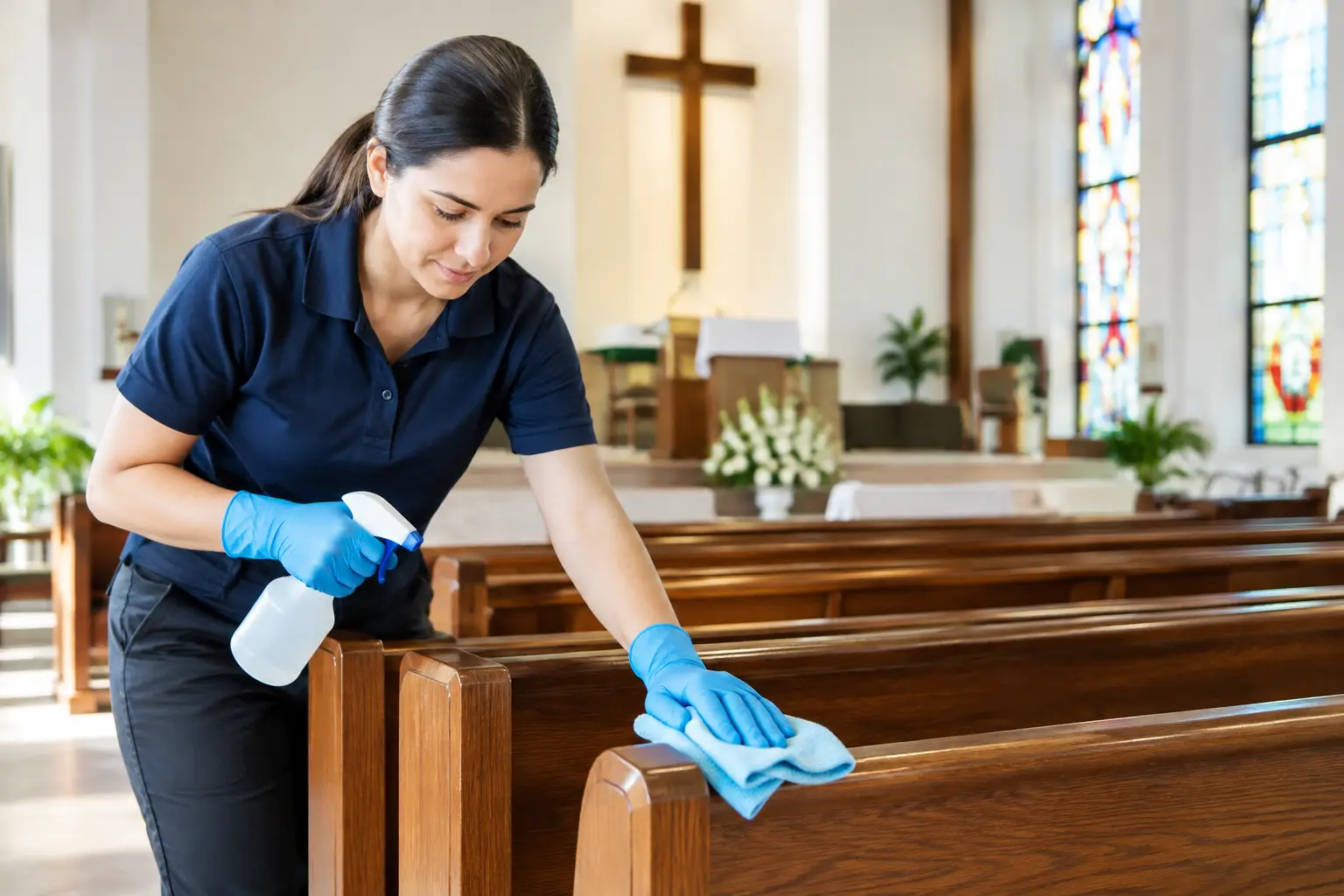
A sanctuary can look orderly from the front pew while the rest of the building tells a different story. Restrooms may be understocked, nursery touchpoints may need attention, and fellowship hall floors may still show the impact of a busy weekend. This religious facility cleaning guide helps administrators and facilities leaders create a dependable program that protects the health, comfort, and confidence of everyone who enters the building.
Religious institutions are not cleaned like standard offices. Their schedules shift around worship services, religious holidays, weddings, funerals, youth programs, classes, meals, and community events. A reliable plan respects those rhythms while maintaining a clean, welcoming environment every day of the week.
Start With How Your Facility Is Actually Used
The most effective cleaning program begins with an on-site assessment, not a generic checklist. Facility leaders should walk the property and identify where people gather, what spaces have the highest turnover, and when cleaning can happen without disrupting ministry, learning, or private observances.
A large church, synagogue, mosque, or temple may include a main worship space, offices, classrooms, child care rooms, kitchens, fellowship halls, restrooms, entryways, and outdoor gathering areas. Each area has different traffic patterns and sanitation needs. A sanctuary might require careful dusting, vacuuming, and detail work, while a preschool room needs frequent disinfection of high-touch surfaces and floors.
Consider the full weekly schedule, not just the main service. Evening meetings, weekday programs, rentals, and special observances can quickly change the level of cleaning required. A facility that hosts three services on Sunday and classes throughout the week may need service six or seven days per week. Another with limited weekday use may benefit from fewer recurring visits plus scheduled deep cleaning after major events.
Build a Religious Facility Cleaning Plan by Zone
Cleaning every room the same way can leave critical areas overlooked and labor spent where it matters least. Dividing the building into zones creates clearer expectations for staff and a more accountable service plan.
Worship Areas and Sanctuaries
Worship spaces require a polished appearance and a respectful approach. Vacuuming or mopping floors, removing dust from seating and ledges, cleaning entry glass, emptying discreet waste receptacles, and straightening common areas all contribute to a welcoming first impression.
These spaces may contain delicate finishes, religious artifacts, instruments, sound equipment, candles, textiles, or historical furnishings. Cleaning teams should receive clear instructions about what may be moved, what must never be touched, and which products are appropriate for wood, stone, metal, fabric, and other surfaces. Strong fragrances may also be unsuitable in spaces used by people with sensitivities or during services.
Restrooms, Lobbies, and Entryways
These are often the clearest indicators of whether visitors believe the building is well managed. Restrooms need consistent cleaning, disinfection of high-touch points, odor control, and replenishment of soap, paper products, and sanitary supplies. A restroom that runs out of hand soap during a busy service creates an immediate hygiene concern.
Lobbies and entryways carry in moisture, salt, pollen, leaves, and debris. During wet weather, floor care and mat maintenance become safety measures, not merely appearance tasks. Clean glass doors, spot-free handles, and well-maintained floors also help first-time guests feel cared for before they enter the worship area.
Classrooms, Nurseries, and Youth Rooms
Rooms used by children need a higher level of detail. Tables, chairs, door handles, light switches, shared equipment, and restroom fixtures should be cleaned and disinfected on an established schedule. Floors deserve close attention because children spend more time near them and often bring food, craft materials, and outdoor debris into the room.
Disinfection should be targeted and performed correctly. More product is not necessarily better. A trained cleaning team uses the proper product for the surface, follows required dwell times, and avoids leaving residues where children may touch or play.
Kitchens, Fellowship Halls, and Event Spaces
Hospitality areas can become high-risk spaces when they are used frequently but cleaned inconsistently. Kitchen cleaning should address countertops, sinks, exterior appliance surfaces, floors, trash areas, and touchpoints. Depending on food preparation and local requirements, some tasks may need to be handled by kitchen staff or a specialized provider.
Fellowship halls and multipurpose rooms require flexibility. After a meal, banquet, or community event, the priority may be trash removal, floor care, restroom service, and spill response. Before an event, it may be presentation-ready tables, spotless entrances, and clean glass. The cleaning scope should account for both reset work and routine maintenance.
Set Frequencies That Match Attendance and Risk
There is no single correct cleaning frequency for every religious institution. The right schedule depends on building size, attendance, the number of programs, age groups served, weather conditions, and whether the facility hosts outside groups.
High-traffic restrooms, entrances, child care areas, and shared meeting rooms may need attention after each major use or daily. Administrative offices and less-used classrooms may require service several times per week. Carpet extraction, hard-floor maintenance, high dusting, and detailed upholstery cleaning are usually planned periodically rather than completed during every visit.
A useful plan separates recurring tasks from project work. Recurring cleaning keeps the building ready for normal operations. Periodic deep cleaning addresses buildup in carpets, corners, vents, baseboards, tile grout, and other areas that routine service cannot fully resolve. This distinction helps leaders compare proposals fairly and avoid assuming that a basic nightly service includes specialized restoration work.
Protect Safety Without Disrupting Worship
Cleaning should support the life of the institution, not interrupt it. That means scheduling work around services and events, using clearly marked wet-floor signage, securing supplies, and keeping cords and equipment out of public pathways. For buildings with elderly members, young children, or visitors with mobility concerns, slip prevention and clear walkways deserve particular attention.
Communication also matters. The facilities contact and cleaning provider should agree on building access, alarm procedures, room priorities, event changes, and who can authorize additional work. A written checklist gives both parties a shared standard, while routine inspections catch concerns before they become recurring frustrations.
For example, a weekend wedding or funeral may require a faster turnover than usual. A well-managed cleaning partner can adjust the scope, assign the right team, and confirm completion without requiring an administrator to supervise every task. That level of accountability is especially valuable when staff are focused on serving families and guests.
Choose a Cleaning Partner That Understands Respect and Accountability
Religious institutions need more than a crew that arrives after hours. They need trained professionals who understand that the building is central to worship, education, fellowship, and community care. Background-conscious staffing, consistent field management, documented procedures, and responsive communication all matter.
Before selecting a provider, ask how they assess a facility, train team members, handle special instructions, manage quality control, and respond when the schedule changes. Confirm whether the proposal identifies service frequencies, supplies, floor care, carpet cleaning, disinfection, and any exclusions. The lowest quote can become costly if important work is vague or left outside the scope.
For larger religious facilities across Northern Virginia, Washington, D.C., and Maryland, Colonial Commercial Cleaning builds custom janitorial programs around each property’s schedule, traffic, and hygiene requirements. A formal walkthrough and onboarding process can turn broad expectations such as “keep the building clean” into clear, measurable tasks.
Keep the Plan Current as Ministry Changes
A cleaning plan should be reviewed when attendance grows, programs expand, a new school year begins, or the facility takes on more rentals. Even small changes, such as adding a weekday meal program or reopening unused classrooms, can affect restroom supplies, waste volume, floor care, and cleaning frequency.
Ask staff and regular volunteers where they see recurring issues. Their feedback often identifies practical concerns that an inspection alone may miss, such as an entryway that becomes slippery after rain or a classroom that needs more frequent attention after crafts. Pair that feedback with regular quality checks and documented follow-up.
A clean religious facility does more than present a polished appearance. It gives members, visitors, families, and staff one less thing to worry about when they come together. When the cleaning program is tailored to the building and managed with care, the facility can remain focused on its purpose: making every person feel welcome, safe, and respected.