
A classroom can look orderly at dismissal and still carry the residue of a full school day: shared supplies, fingerprints on door hardware, spills beneath desks, and germs transferred across dozens of hands. The best ways to sanitize classrooms begin with a repeatable process, not a last-minute wipe-down. For school administrators and facilities teams, the goal is to reduce health risks while keeping rooms ready for learning, staff confidence, and parent expectations.
Start With the Difference Between Cleaning and Sanitizing
Cleaning removes visible soil, dust, crumbs, and many germs from surfaces. Sanitizing reduces germs on a surface to a safer level when it is performed with the right product and procedure. Disinfecting is generally used when a stronger germ-killing process is needed, particularly after illness concerns, bodily-fluid incidents, or direction from public health officials.
That distinction matters because disinfectant cannot do its best work on a dirty surface. A desk covered with dried food, marker residue, or soil should be cleaned first, then sanitized or disinfected as appropriate. Rushing this sequence can leave classrooms looking clean without delivering the level of hygiene staff and families expect.
Product labels should guide the process. Teams need to use products approved for the intended surface, follow required dilution instructions, and allow the stated contact time before wiping or letting a surface air dry. More chemical is not automatically better. Incorrect use can damage finishes, leave residue, create odors, or pose avoidable exposure concerns for students and staff.
Focus Classroom Sanitizing Where Hands Go Most Often
A complete classroom program does not treat every square foot as equal. High-touch points deserve daily attention because they receive repeated contact from many people throughout the day. In most classrooms, these include:
- Door handles, push bars, locks, light switches, and cabinet pulls
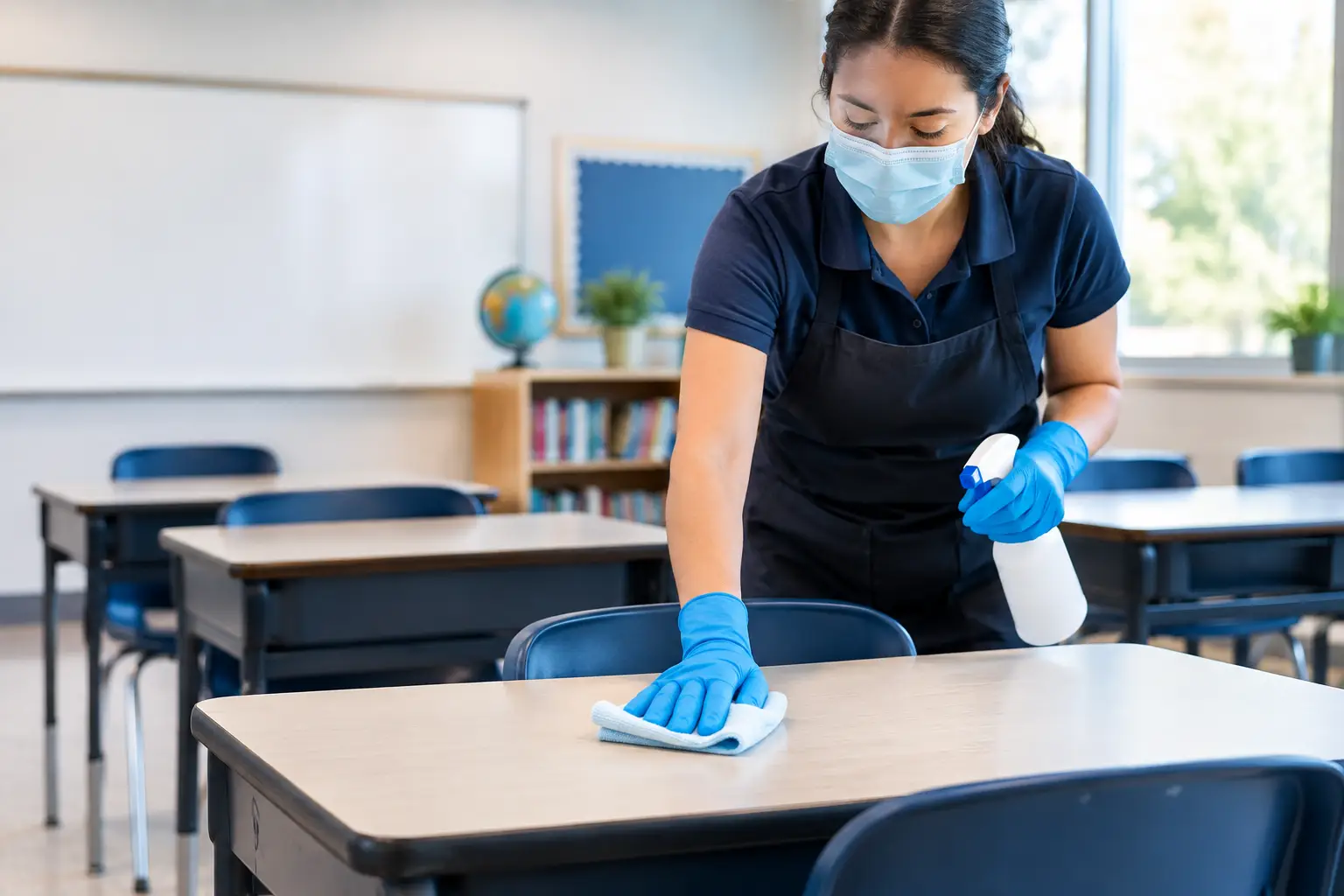
- Student and teacher desks, chair backs, tables, and shared workstations
- Keyboards, mice, tablets, whiteboard markers, calculators, and classroom phones
- Sink fixtures, soap dispensers, paper towel dispensers, and restroom touchpoints
- Railings, water fountain controls, copier buttons, and common-area equipment near the classroom
The frequency should reflect how the room is used. An elementary classroom where students share manipulatives has different needs than a college lecture room used by several classes each day. Science labs, art rooms, nurse areas, cafeterias, gyms, and daycares also require their own procedures because of specialized equipment, food contact, body-fluid risk, or high turnover.
Build a Schedule That Matches the School Day
The best ways to sanitize classrooms are built into the operating schedule rather than saved for periodic deep cleans. Daily service should address high-touch surfaces, waste removal, visible spills, floors, and restrooms. A more detailed weekly rotation can cover chair legs, wall spots, baseboards, storage fronts, windowsills, and areas beneath movable furniture.
Timing is just as important as task selection. Many schools need most work completed after dismissal to avoid disrupting instruction. Others benefit from daytime porters who can respond to spills, replenish supplies, clean restrooms, and sanitize shared touchpoints between busy periods. Large campuses may need both.
During cold and flu season, after a confirmed illness concern, or during high-attendance events, increase attention to common surfaces and shared spaces. This does not necessarily mean applying disinfectant everywhere, every hour. It means using a documented response plan based on the room, the exposure, the product instructions, and the school’s policies.
Use Color-Coded Tools and Controlled Workflows
Cross-contamination is one of the easiest ways for an otherwise careful cleaning program to fail. A cloth used on a restroom fixture should never be used on a classroom desk. A mop used in a cafeteria spill should not move directly into a nurse area or learning space without being properly changed and maintained.
Color-coded microfiber cloths and mop heads help teams keep tasks separated. Dedicated tools for restrooms, classrooms, food-service areas, and specialty spaces make expectations visible and easier to verify. Microfiber is especially useful because it captures dust and soil effectively when laundered and maintained correctly.
Workflows should move from cleaner areas to dirtier areas and from high surfaces to low surfaces. For example, a technician can address classroom touchpoints and desks before cleaning the floor. Waste should be removed carefully, liners replaced as needed, and hands washed or gloves changed between tasks. These details protect the room and demonstrate the discipline behind a dependable janitorial program.
Protect Indoor Air and the People Using the Room
Sanitizing should support a healthy learning environment, not create a strong chemical smell that lingers into the next morning. Select products appropriate for educational settings and use them as directed. Ventilation, proper dilution, staff training, and secure chemical storage all matter.
Spraying products broadly across a classroom can create unnecessary overspray and may not provide even coverage. In many cases, applying a product to a cloth or using a controlled application method is more effective for desks, handles, and equipment. Electronics require extra care. Use products compatible with manufacturer guidance, avoid soaking ports or screens, and never assume that a general-purpose disinfectant is safe for every device.
Schools also need clear procedures for bodily fluids, sharps, and suspected contamination. These incidents should be handled by trained personnel with the appropriate personal protective equipment and disposal process. Routine classroom service and incident response are related, but they are not the same task.
Train Teams and Verify the Work
A sanitation plan is only as reliable as the people and oversight behind it. Staff should understand which surfaces receive which treatment, how long products must remain wet, where tools belong, and what to do when they find damage, supply shortages, pest activity, or a spill requiring escalation.
Written cleaning checklists create consistency across classrooms, shifts, and buildings. They also make it easier for a facilities director to confirm that recurring work is being completed. Supervisory inspections add another layer of accountability, especially for larger schools where one missed wing or poorly stocked restroom can quickly affect staff confidence.
Communication matters as much as inspection. Teachers should know how to report an issue, who is responsible for responding, and what response time they can expect. Cleaning teams should have a clear point of contact for schedule changes, after-hours events, building access, and priority areas. When those expectations are defined during onboarding, sanitation becomes a managed operation rather than a recurring complaint.
Plan for Shared Supplies and Special Spaces
Some of the highest-risk classroom items are not fixed surfaces. Shared headphones, manipulatives, library materials, lab tools, sports equipment, and art supplies may pass through many hands in a single day. The right approach depends on the material and whether it can tolerate moisture or an approved sanitizing product.
Where possible, reduce unnecessary sharing, provide time for items to be cleaned between groups, and create separate bins for used and ready-to-use materials. Soft items, such as fabric seating or plush learning tools, often need laundering or manufacturer-approved treatment rather than standard surface disinfectant. Facilities leaders should avoid one-size-fits-all instructions that could damage materials or give staff a false sense of protection.
Make Sanitizing Part of a Reliable Facilities Plan
Schools do not need an overly complicated system. They need a clear scope, appropriate products, trained technicians, and documented follow-through. A professional cleaning partner can help translate a building’s traffic patterns, class schedule, and hygiene priorities into a workable plan that protects instruction time.
For schools and universities across Northern Virginia, Washington, D.C., and Maryland, Colonial Commercial Cleaning develops custom recurring cleaning programs with defined checklists, trained field-managed teams, and service schedules that fit each facility’s operations. The right plan can cover routine classroom care while providing a dependable process for deep cleaning and disinfecting when conditions call for it.
A well-sanitized classroom is not defined by a sharp scent or a quick pass with a wipe. It is the result of consistent, verified work that gives students room to learn and gives administrators confidence that their facility is being cared for every day.